The offer letter looks generous—until you do math
The email lands with that clean, confident line: “annual stipend,” plus tuition covered, plus health insurance. It reads like stability. Then the questions start stacking up in small, annoying ways—what’s the pay schedule, what fees aren’t waived, what does “summer funding not guaranteed” mean in practice, and how far does the insurance actually go? The number looks large enough to stop worrying, right up until rent tabs, tax withholding, and a realistic grocery bill turn it into a weekly constraint. Before anyone negotiates or commits, the offer needs to be converted into a cash plan that survives an ordinary month.
The fastest reality check is to turn the offer letter into “spendable per month.” Start with stipend × months actually paid (9 vs 12 is common), subtract estimated taxes, then subtract fixed items the letter glosses over: mandatory fees, premiums, transit parking, and any lab or program charges. Divide what’s left by 12 anyway, because expenses don’t pause in summer.
Then stress-test it against housing. If rent plus utilities eats 45–55% of net cash, the offer isn’t generous—it’s fragile. The difference shows up as credit-card drift, skipped medical care, or needing a second job right when research ramps.
Your first stipend conversation sets the baseline
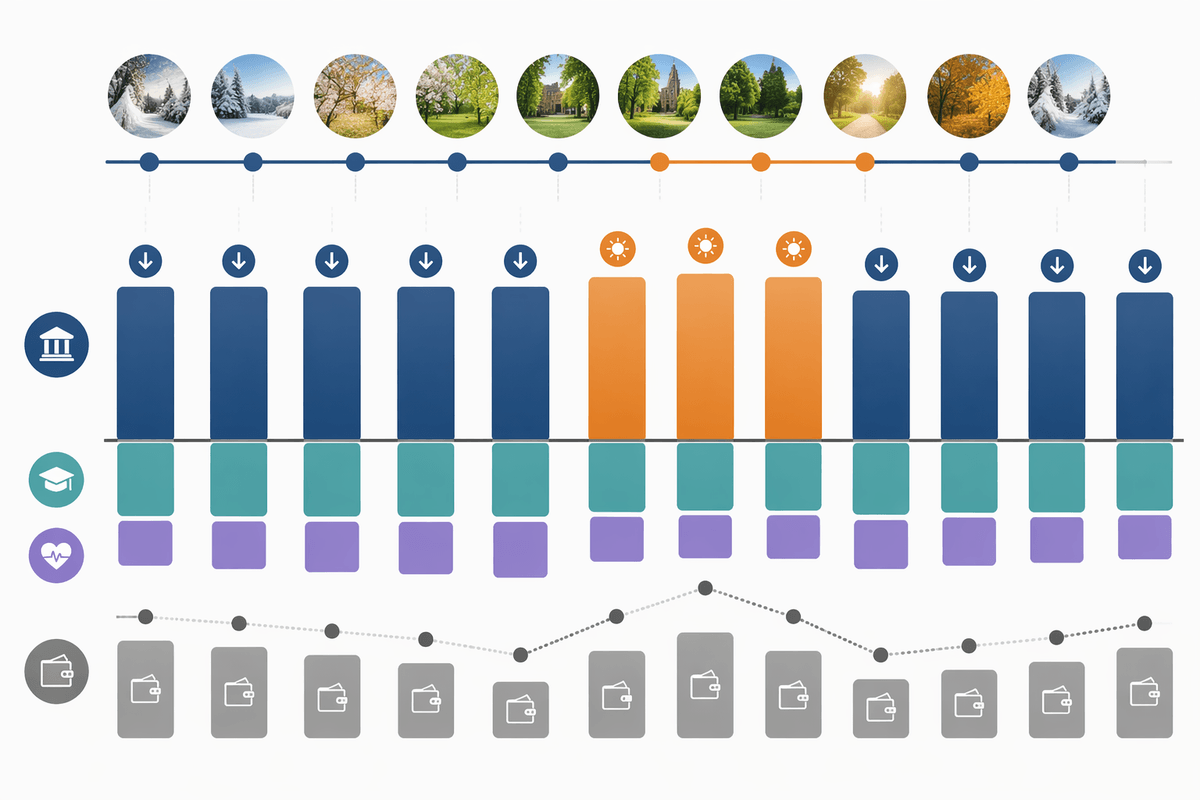
Once the monthly cash plan looks tight, the next pressure point is how early numbers turn into “the norm.” Programs don’t treat stipends like salaries, so the first conversation tends to be framed as clarification, not negotiation—and that’s exactly why it matters. If you accept the initial phrasing (9-month appointment, “typical” summer support, standard fees), every later request gets compared to the baseline you quietly agreed to. Timing is the constraint: these details are easiest to adjust before you commit, not after you’ve moved and started producing.
The practical move is to ask for the offer in writing as a 12-month cash timeline: pay periods, appointment dates, and whether summer funding is guaranteed or contingent on teaching/grants. Then ask what can change: fee waivers, a one-time relocation allowance, first-year top-ups, and whether health premiums are fully covered or deducted from pay. Departments often can’t “raise the stipend,” but they can shift the all-in package. If the answers stay fuzzy, treat that fuzziness as a cost—not optimism.
Hidden costs that make fully funded feel thin
After the cash timeline is on paper, the “fully funded” label starts leaking in predictable places. The first leak is administrative: student fees that aren’t waived, union dues if applicable, quarterly health premiums, and the kind of one-time charges that hit right when savings are lowest (ID fees, international services fees, orientation charges). Then there are research-adjacent costs that never show up in the letter—conference travel you’re “encouraged” to do, poster printing, software licenses, a laptop that can actually run your workflow. Even when a lab reimburses, reimbursements arrive weeks later, which turns into a short-term credit limit problem.
The second leak is timing. A 9-month appointment creates summer gaps, but the expenses stay 12 months. Add the cash friction of moving (deposit + first month + last month), and “covered tuition” doesn’t help the month rent is due. If the margin is already thin, these hidden costs don’t feel like line items; they feel like constant micro-decisions—delay the dentist, skip the flight home, or carry a balance until the next paycheck clears.
The opportunity cost you won’t notice monthly

Even if the stipend budget finally balances, the bigger cost stays quiet because it doesn’t show up as a bill. The month-to-month feels “fine,” while the gap accumulates somewhere you don’t check: the difference between what a peer is earning in industry and what actually lands in your account after fees and premiums. The constraint is timing. Those first two years often include moving costs, uneven summer pay, and low savings, so retirement contributions are the first thing to get postponed—without any dramatic moment that forces the issue.
To make it visible, run a simple shadow paycheck. Take a realistic entry-level industry salary in your field, subtract taxes and the same rent, then assume a modest 401(k) contribution plus any employer match. Now compare that to the Ph.D. net cash plan and the retirement contribution you can realistically make (often zero). The opportunity cost is the spread plus the compounding you miss, and it’s largest early—right when the Ph.D. is most uncertain and quitting is most expensive.
This is why “I can live on the stipend” isn’t the same as “the deal is good.” The hidden trade is buying time to train while selling your early earning years, and the price only becomes obvious when you total it after three or four cycles of delayed saving.
Run three futures: academia, industry, exit early
With the shadow paycheck in mind, the next move is to stop treating “a Ph.D.” as one outcome. Put three futures on paper and price them like competing job offers, because timing is the constraint that doesn’t negotiate. Future A: academia. Assume 5–6 years to finish, then a postdoc or two with another 2–5 years of modest pay and geographic constraint. Discount it for probability, because tenure-track hiring is not a guaranteed conversion, and the “extra years” land right when peers are compounding.
Future B: industry after the Ph.D. Model a realistic Ph.D.-level starting range in your field, but push the start date out and add the foregone 401(k) match along the way. This path can win on income, but only if the credential changes your job ladder, not just your title. Future C: exit early. Price the two-year outcome: master’s en route (if offered), sunk moving costs, and the earnings gap you can’t reclaim. If that scenario breaks your finances, the offer is more fragile than it looks.
Decision checkpoints before you commit five years
Once the three futures are priced, the decision stops being “Ph.D. or not” and becomes “what would make this reversible.” The first checkpoint is before you sign: get the funding terms nailed down as if you were underwriting a loan—appointment length, summer guarantees, fee waivers, health premium details, and what happens if your advisor’s grant ends. If the program won’t put the basics in writing, that’s not a personality quirk; it’s a risk signal, because your downside is cash-flow, not ego.
The next checkpoint is at the end of year one, when the novelty wears off and the work becomes repetitive. You want a concrete deliverable by then: a committee formed, a mapped milestone (quals/proposal), and a credible path to summer pay that doesn’t rely on heroics. If you can’t describe, in plain calendar time, what “good progress” looks like for year two, you’re already drifting into the expensive version of the degree.
The last checkpoint is immediately after quals/proposal, when quitting gets emotionally harder but financially clearer. Ask: if you had to leave in six months, do you have a credential (master’s en route), references outside one lab, and enough cash to relocate without debt? If not, the program has effectively turned uncertainty into a one-way door—exactly the kind of commitment that makes five years feel inevitable instead of chosen.
Choose the option that keeps your downside survivable
At this point the “best” path is usually the one that fails gracefully. If the stipend only works when nothing breaks—no summer gap, no medical bill, no advisor funding wobble—then the option with the highest upside is also the one most likely to trap you in a slow, underpaid year. A survivable downside looks boring on paper: 12-month guaranteed pay (or a written bridge plan), fees and premiums that don’t spike, and a housing plan that leaves cash after rent without relying on credit.
Pick the offer where exiting is financially possible. That means a master’s en route in writing (if it exists), milestones with calendar dates, and enough liquidity to relocate once without debt. If industry is the alternative, the same rule applies: choose the job that keeps savings and skill growth moving, so “try a Ph.D. later” stays a real option instead of a story you tell yourself.


![How to Negotiate Medical Bills in Collections [13 Legit Steps]](static/image/2026/07/14/9e314051-9bc1-4519-a5b7-8e862903d3e4.png)





![Copper Banking Review [Is the Copper Debit Card Legit?]](static/image/2026/07/14/9e0812e3-46e4-4fe8-9ffa-29f782e18bf6.png)