Latvia isn’t just a Riga stopover
At 8:12 a.m. in Riga Central Market, I hovered between the smoked fish stall and the coffee queue, watching my Google Map insist the “old town loop” would take 45 minutes. It didn’t account for the slow squeeze through the pavilions, the extra stop for rye bread, or the fact that everything smelled like it deserved a second lap. That tiny misread is the same one people make with Latvia: you plan it like a quick checkbox, and the friction (in a good way) stretches the day.
Riga can absolutely carry a long weekend, but treating Latvia as “Riga + airport” is like treating Tallinn as just a postcard skyline—efficient, yet oddly thin. The payoff here is variety without constant repacking: Art Nouveau streets and serious museums in the city, then an easy pivot to seaside air in Jūrmala or forests and small towns that feel more local than curated. It works best for couples who like walking cities but don’t want every day to be a museum sprint; if you need nonstop headline attractions, Vilnius may feel denser.
In summer, Jūrmala trains fill up at beach hours and restaurant tables tighten after 7 p.m.; in shoulder months, wind off the Baltic can make “just wander” days feel longer than planned. Latvia isn’t bigger than your spreadsheet, but it’s bigger than a stopover—if you let the gaps be part of the point.
Decide when longer stays pay off
At 6:47 p.m., with a damp paper ticket in my hand, I watched the next Jūrmala train slide to “20 min” on the board and did the quick math: beach light vs dinner reservation. That’s where Latvia starts charging you—not always in euros, but in timing. If you’re here for three days, you’ll keep choosing between the city’s best parts instead of sequencing them.
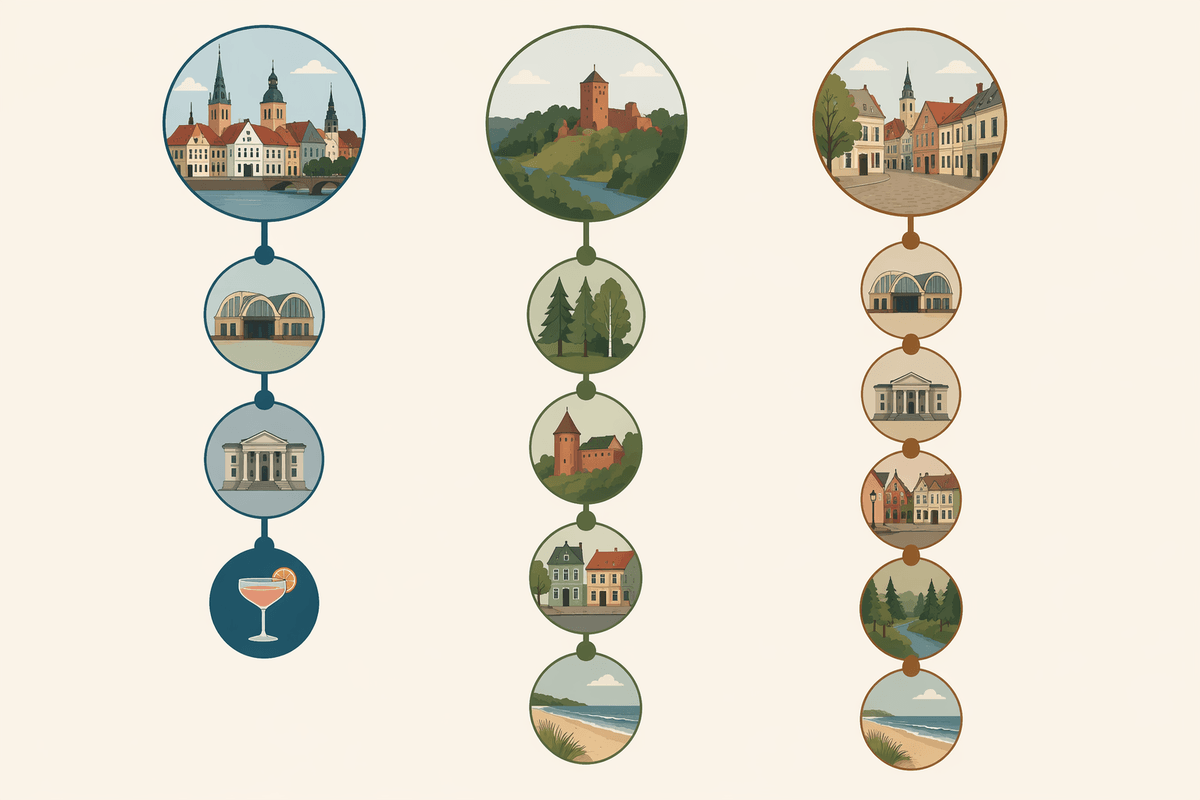
A 3-day plan pays off when you want Riga to feel crisp: Old Town, a proper market crawl, one museum you actually linger in, and a long walk that ends with cocktails rather than an exhausted Bolt ride. Five days is the first “value” jump: you can base in Riga and still do a full Jūrmala day without treating it like a commute, plus one slower day trip (Sigulda works well if you like forests and castles more than night life). Your second and third restaurant nights get pricier unless you mix in canteens and bakeries.
Seven days only makes sense if you hate repacking and like texture over highlights—one extra base (Cēsis or Kuldīga) turns Latvia from “capital + beach” into small-town evenings, early mornings, and less queue math. It doesn’t work for couples who measure days by headline sights; you’ll feel the gaps. If you’re debating Tallinn or Vilnius, stretch Latvia to a week only when you want fewer transfers more than you want a denser checklist.
Choose a second base outside Riga
At 10:31 p.m., I had two tabs open—one Riga hotel, one guesthouse in Cēsis—and a third problem: both wanted a two-night minimum on a Friday in July. The prices weren’t shocking; the check-in windows were. It was the kind of small booking friction that decides whether “second base” feels relaxing or like a forced detour.
Jūrmala is the low-risk choice if you want a contrast without logistics: frequent trains, beach air, and evenings that feel lighter than Riga’s bar-and-museum rhythm. The trade-off is crowd timing—arrive late morning and you’ll thread through families and day-trippers; arrive early and you get the quiet dunes but you’re committing to a slower lunch scene. It works best for couples who care about food and walks more than “new city” energy.
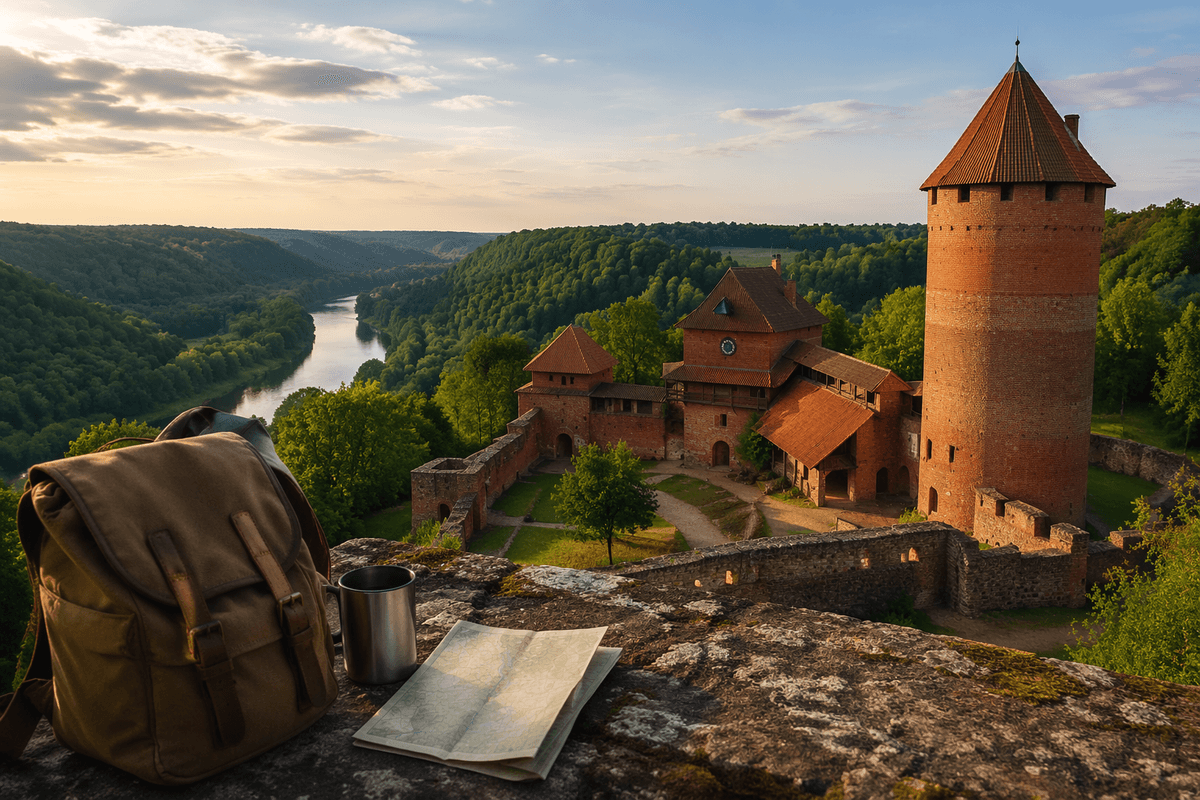
If you want Latvia to feel bigger, Cēsis (or nearby Sigulda) pays off as a practical second base: forests, short hikes, early café mornings, and less “where do we eat that isn’t booked?” pressure than Riga on weekends. Kuldīga is prettier but more committing—buses take longer, nights are genuinely sleepy, and rain can turn a romantic river stroll into an indoor reset. Pick one base that matches your fatigue tolerance, not your ambition.
Build an itinerary that slows you down
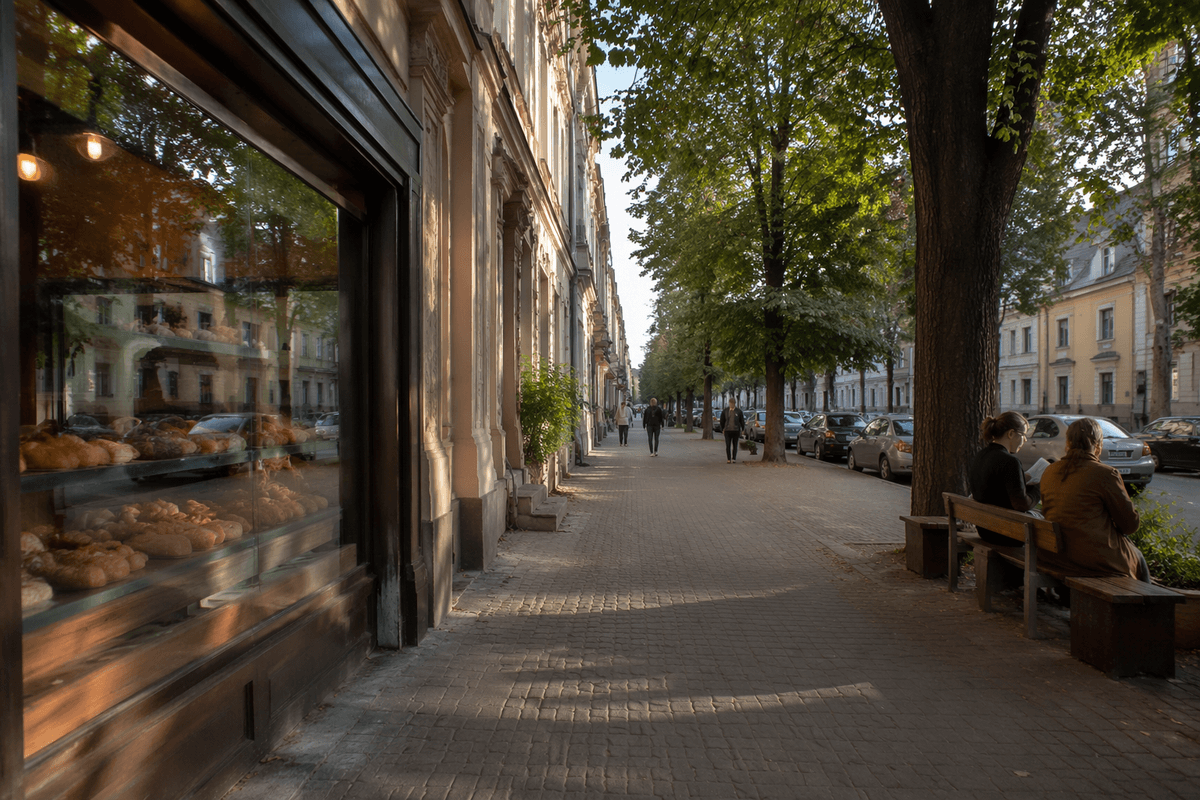
At 9:26 a.m., I stood on Alberta iela with a coffee cooling in my hand, debating whether to “just do” the Art Nouveau Museum before the tour groups arrived. The spreadsheet said it fit neatly before lunch; my feet said yesterday’s Old Town cobbles were still in the legs. I watched a couple power-walk past with matching daypacks and realized my plan was starting to look like Tallinn: efficient, impressive, and slightly joyless.
The trick in Latvia is to build days with one anchor and one drift, not three anchors and a rushed dinner. In Riga, that can be market + one museum, then a long neighborhood loop (Centrs to Āgenskalns) that’s more about benches and bakeries than ticking streets off a list. It works for couples who like value and walkability; if you need constant “big sights,” the slower blocks can read as empty time rather than recovery.
For 5–7 days, treat Jūrmala or Cēsis as a pace-reset, not an attraction bundle. Go out early, accept that beach hours and train crowding will compress the middle of the day, and plan your “nice dinner” for the night you’re back in Riga when you can actually choose, not just grab what’s left at 8:30. The trade-off is obvious: fewer headline stops, but far less route-inefficiency—and you stop paying for Latvia with transit minutes and last-minute Bolt rides.
Know what’s worth spending on
At 4:18 p.m., I tried to book a Saturday dinner in Riga and realized the “€€” places weren’t expensive in isolation—they were expensive when you only had one shot at them. A table at 6:30 was available; 8:00 was a shrug. That’s the sneaky Latvia cost: not constant high prices, but peak-time bottlenecks that push you into taxis, subpar backups, or paying more just to keep the day smooth.
If you’re mid-budget and value-driven, spend first on location, not hotel stars: a quiet Centrs base (or just outside Old Town) saves Bolt rides and lets you do “reset walks” between anchors. In Jūrmala, paying a little extra to be near a train stop beats paying less and losing beach time to long, hot walks with bags. It won’t matter for couples who love long strolls; it matters a lot if you’re doing 25k steps and still want energy at dinner.
Food is where the upgrade pays off—one planned splurge meal in Riga, then deliberately cheap wins (market snacks, bakeries, canteens) so you don’t resent night three. I’d skip pricey guided Old Town tours unless you’re history-first; put that money toward a sauna/spa session or a museum you’ll actually linger in. The trade-off is simple: fewer “big” purchases, more comfort—and fewer decisions made tired at 7:45 p.m.
What I’d do with five days
On day two, at 9:05 a.m., I’d be standing outside Riga Central Market again with a paper bag of cherries, deciding whether to take the tram across the river or keep walking until the city “clicks.” The temptation is to lock every block into your spreadsheet; the better move is to leave one morning deliberately under-planned. Riga rewards slow loops more than Tallinn does, where the Old Town can feel like a neat circuit you finish and move on from.
My five-day version is simple: three Riga days, one Jūrmala day, one forest/castle day (Sigulda or Cēsis depending on how much you hate transfers). Day 1: Old Town + a museum you actually linger in, then an early dinner so you’re not negotiating reservations at 8:30. Day 2: market crawl + Centrs/Art Nouveau streets, with a long walk that ends wherever your feet call it. Day 3: Jūrmala early train (beat the beach-hour crush), dunes and sea air, back before dinner when Riga has choices. Day 4: day trip for hikes and a castle, accepting that buses/trains create “dead time” you wouldn’t notice on a Vilnius highlights sprint.
Day 5 is the buffer: a second museum, a sauna/spa, or a plain wandering day if the weather turns. If that sounds like wasted time, bolt Latvia onto Tallinn or Vilnius; if it sounds like breathing room, keep the five and let Riga be the anchor rather than the checkbox.

![Copper Banking Review [Is the Copper Debit Card Legit?]](static/image/2026/07/14/9e0812e3-46e4-4fe8-9ffa-29f782e18bf6.png)