The real choice: skyline or street life
I paused on the Huangpu River promenade with my phone open to a saved map, thumb hovering over two pins: “Bund viewpoint” and “Shanghai Tower.” It was 6:12 p.m., the light was turning silver, and the crowd flow near Nanjing Road was already tightening like a bottleneck. The map made everything look adjacent; on the ground, even crossing a road felt like a small negotiation.
If you’re here four days and you care most about the skyline, the real fork is simple: do you want your “wow” from across the water (Bund) or from inside the glass (an observatory)? The Bund is cheaper and faster to repeat—great for solo pacing—while tower decks cost more, add ticket/app friction, and can turn into an elevator-queue commitment. For classic street life, skip the most polished “old town” corridors and aim for lanes that still have food smells and everyday noise: Yu Garden area for a concentrated hit, then better wandering later in the French Concession.
To keep transit from eating your day, group by river sides: Bund + Nanjing Road if you can tolerate crowds; Pudong towers when visibility is decent and you can commit to a timed entry; Old City lanes when you’re hungry and don’t mind slow walking; museums only if you’ve checked Monday closures. If you’re undecided, choose one paid “big view” and let the rest be street-level—your feet will tell you when you’ve had enough marble.
Start with the Bund at sunset
I hesitated at the Nanjing East Road metro exit with a paper cup of milk tea sweating through the sleeve, watching people surge toward Exit 2 like it was a showtime door. It was 6:40 p.m., and the sky had that hazy peach tint Shanghai does so well—pretty, but not always “clear.” The map said the riverfront was minutes away; my legs said it was a slow shuffle with frequent stop-starts.
For a first-night skyline hit, the Bund at sunset is the best value because you can treat it like a flexible window instead of a booked event. The trade-off is crowd density: between 6:00–8:00 p.m. it’s more shoulder-to-shoulder than cinematic, especially near the most famous photo zones by Nanjing Road. If you want the view with less friction, walk 10–15 minutes north or south along the promenade—same skyline, fewer tripods, and you’ll spend your energy moving instead of waiting for a two-second gap.
On a humid or smoggy evening, the towers across the Huangpu can flatten into silhouettes, which is still atmospheric, just not postcard-sharp. This is why I’d start with the Bund before committing to any paid deck: it tells you what the visibility is doing, and whether tonight should be “river walk + snacks” or “save the big height for a clearer day.”
Dive into old lanes near Yu Garden
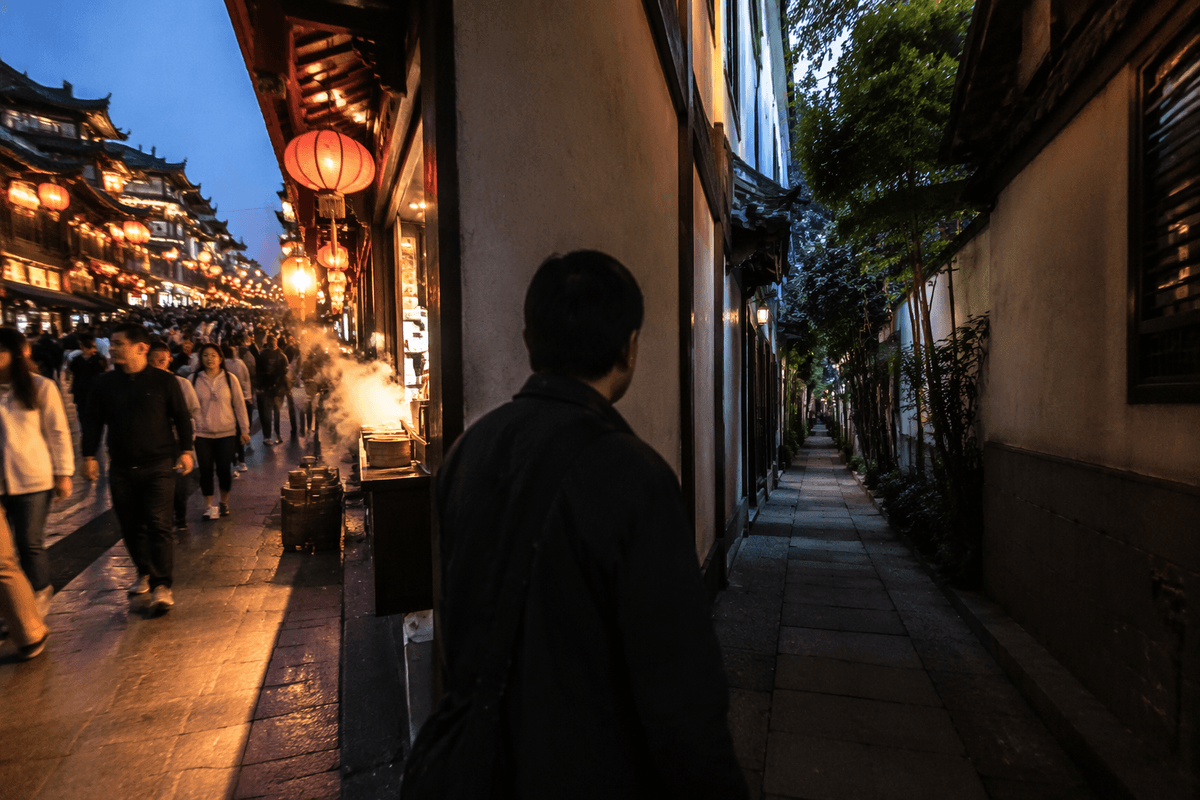
I stopped just outside Yuyuan Garden station, rereading my own pin labels—“Old City snack lane” versus “Yu Garden proper”—while a tour group’s flag bobbed past my shoulder. It was 11:18 a.m., already sticky, and the flow on the main corridor felt like a moving line rather than a neighborhood. On the map, the lanes looked charmingly dense; in person, the widest streets are the loudest and most stage-managed.
If you want old-town texture without surrendering an entire afternoon to crowds, treat Yu Garden as a perimeter walk, not a single bullseye. The paid garden itself can be worth it if you like classical landscaping and can handle ticket friction (and some slow shuffling inside); it’s less compelling if your priority is street life and food. What worked better for me was slipping into narrower alleys a block or two away from the brightest lanterns—still dumpling steam, still tiny shops, but fewer selfie-stops clogging the path.
Timing is the real lever: go early (before 10:30 a.m.) for photos and calmer wandering, or lean into the chaos after lunch when you’re in “snack crawl” mode and don’t mind moving at crowd speed. This area is ideal for a solo traveler who likes short, high-reward walking; it’s a poor fit if you hate stop-start movement or you’re trying to cover big distances the same day. If your feet start arguing, let them win and save your longer, prettier meander for the French Concession later.
Go high in Pudong’s supertall towers
At 2:07 p.m., I stood in the cool lobby under Shanghai Tower’s soaring ceiling, checking my screen brightness because my QR code wouldn’t scan on the first try. Outside, Lujiazui looked crisp enough from street level, but the tops of the buildings kept disappearing into a pale haze like someone had erased the skyline’s sharpest lines. It felt like the wrong moment to pay for height, which is exactly why people end up paying twice.
Pudong’s supertalls are the cleanest “single wow” you can buy, but they only win if visibility cooperates and you can tolerate a timed-entry rhythm. Compared with the Bund, the trade-off is commitment: you’re swapping a flexible river walk for ticket/app friction, security lines, and an elevator queue that can eat the best light if you arrive at the wrong hour. For mid-budget solo travel, I’d pick one deck—Shanghai Tower if you want maximum height, or SWFC/Jin Mao if you’d rather spend less and still get a strong view—and skip the urge to “collect” them all.
What works: go on a weekday, aim for late afternoon so you catch both daylight and early city lights, and keep a backup plan if the forecast is humid. If the skyline is already milky from the Bund, go street-level in Lujiazui instead (riverside paths, malls for A/C, an easy food reset) and save the tower for a clearer day. It’s a better use of money, and honestly, your patience.
Spend a slow afternoon in French Concession
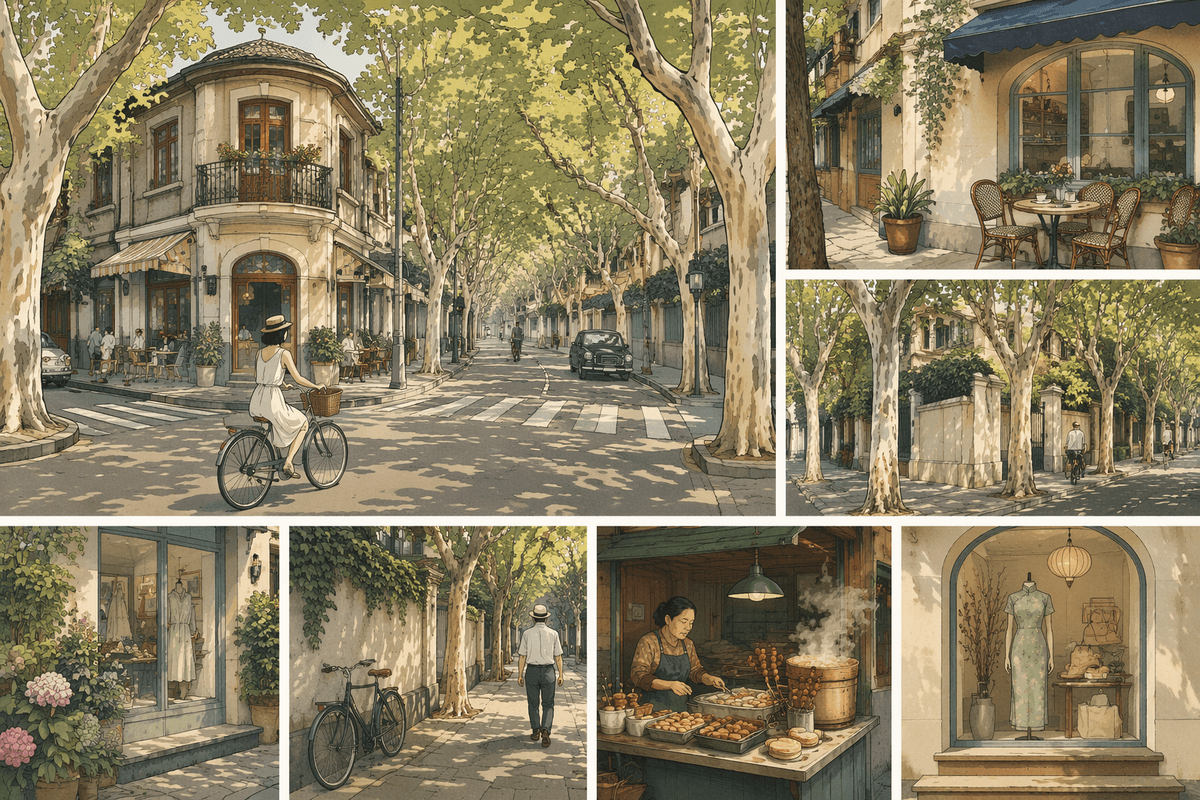
I almost skipped the French Concession because it didn’t look “iconic” on my map—just a cluster of tree-lined streets and coffee pins—but at 3:36 p.m. my feet were done negotiating crowds. I surfaced from the metro into warmer air, found shade under plane trees, and immediately felt the pace drop a notch. After Pudong’s lobbies and the Bund’s riverfront surge, it was the first place all day where walking didn’t feel like defending your lane.
This area works best as a slow, low-stakes block-by-block wander, not a checklist. The trade-off is that you’re swapping big landmarks for texture: leafy streets, low-rise lanes, boutiques, and small snacks that reward drifting rather than “arriving.” It’s ideal if you’re solo and want to reset—especially mid-afternoon when museums can be closed and observation decks feel like a commitment—but it’s less satisfying if you need constant headline sights. Expect some route inefficiency: the prettiest streets aren’t always the fastest between two pins, and that’s kind of the point.
Go after lunch and before dinner when cafes have seats and the sidewalks aren’t yet in evening-date mode; weekends can still pack popular corners, just with a calmer crowd flow than Nanjing Road. If you’re watching your budget, treat it like a “one paid drink, many free streets” neighborhood, then save your appetite for a simple local dinner nearby rather than chasing one famous, overbooked table.
My pick for one perfect Shanghai day
At 9:04 a.m. I was on the metro with 23% battery, staring at two saved routes and realizing I’d planned like I had unlimited legs. The temptation was to zigzag for “one more must-see,” but Shanghai punishes that with transfers, queues, and the kind of low-grade stress that makes lunch feel like a chore. So I made the day about one cross-river jump, not three.
My “perfect day” starts in the Old City early: arrive near Yu Garden before the main tour flags thicken, do a quick perimeter wander, then choose one commitment—either pay for the garden if you like classical design, or skip it and spend that time eating and slipping into smaller lanes. The trade-off is simple: you’re swapping a tidy attraction for messier street life (and better snacks). By late morning, leave while it still feels navigable; staying too long turns every ten meters into stop-start crowd flow.
After lunch, reset in the French Concession for shade and unforced walking—this is where solo travel feels easiest, even if your route gets inefficient on purpose. Around 4:30 p.m., decide based on the sky: if visibility is decent and you can tolerate QR/timed-entry friction, do one Pudong deck; if it’s milky, skip the height and go straight to the Bund for sunset and night lights. Either way, I’d rather end with the river than a mall—pick the version that matches your patience that day.
![Copper Banking Review [Is the Copper Debit Card Legit?]](static/image/2026/07/14/9e0812e3-46e4-4fe8-9ffa-29f782e18bf6.png)

![How to Negotiate Medical Bills in Collections [13 Legit Steps]](static/image/2026/07/14/9e314051-9bc1-4519-a5b7-8e862903d3e4.png)