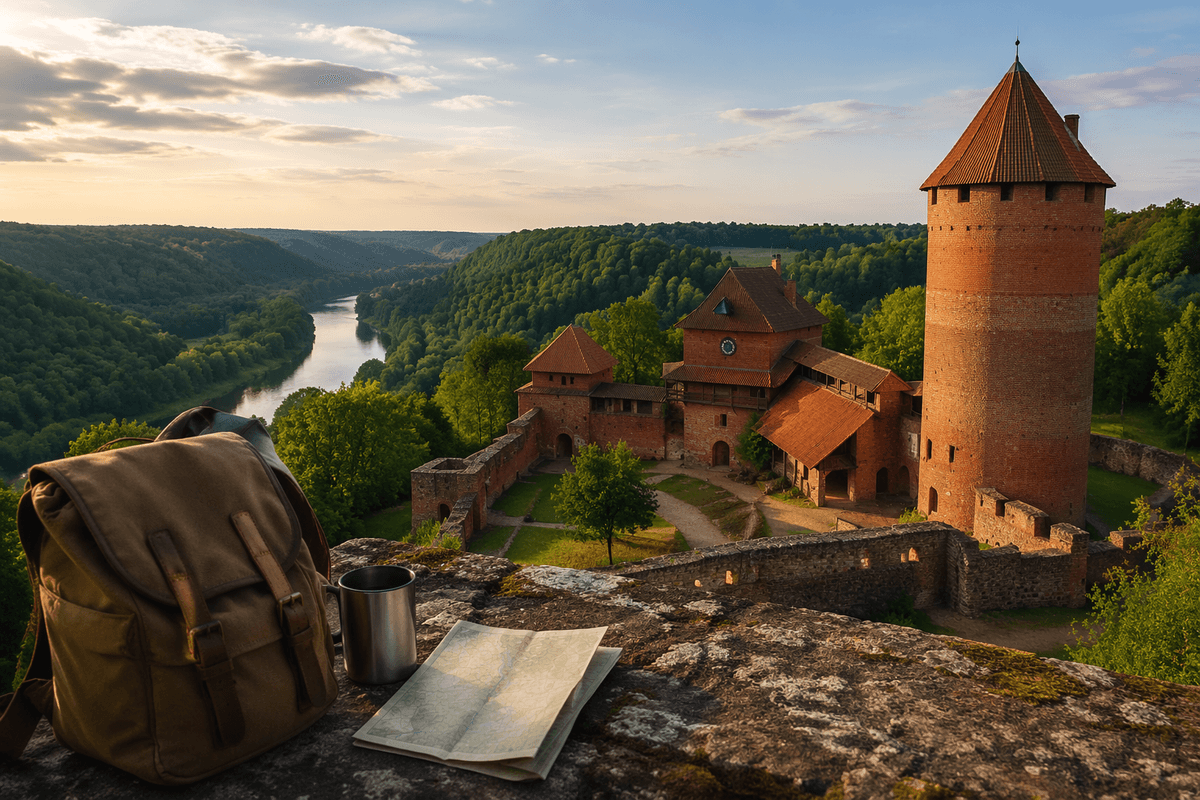
It’s not just a beach day
I paused on the pebbly edge of the bay with my mask half on, watching a rental boat idle while two kids practiced cannonballs off the rocks. On the map, the “underwater Neolithic settlement” read like a quick swim-and-done pin, but the water in front of me looked more like a standard Adriatic postcard than an archaeological site. That mismatch matters, because you can easily spend your best swimming hour chasing a headline that isn’t actually legible from the surface.
This isn’t just a beach day because the experience hinges on conditions you don’t control: sunlight angle, chop from afternoon boat traffic, and how much sand has been stirred up lately. Compared with a normal snorkel stop—where fish and rocks cooperate no matter what—subtle human-made shapes need calmer water and patience, and even then you’re often “confirming” something rather than discovering it. If you’re the kind of couple that wants a clear, immediate payoff, this can feel thin without some interpretation layered in.
Where it does work is if you already like slow-looking: hovering, scanning, and accepting that visibility is the real ticket price. Morning tends to beat late day for clarity, but that competes with museum time, ferry logistics, and the basic desire to sleep in on an island. If your Korčula plan is tight and beach towns are the main draw, you’ll want a version of this that doesn’t hijack a half-day—something that fits around a swim you’d take anyway.
What the Korčula seabed holds
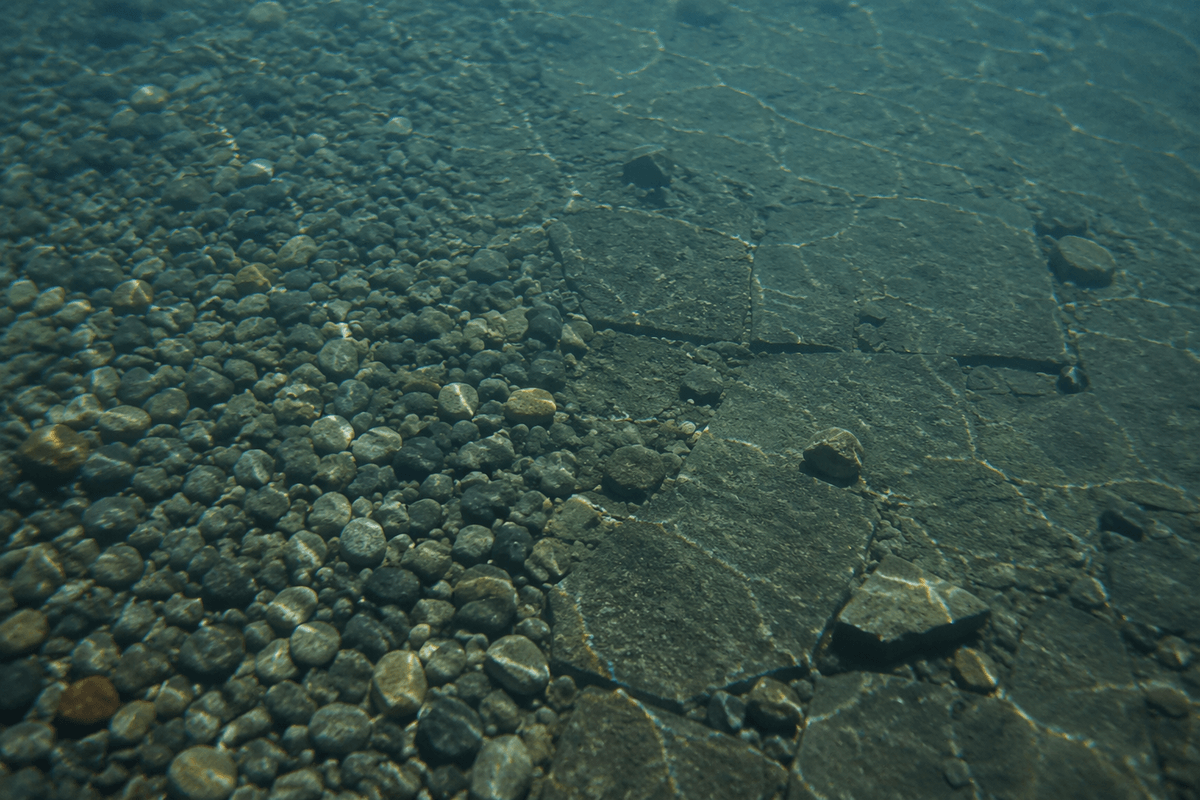
A few minutes into the swim, I realized the “site” isn’t a single cinematic reveal so much as a low-contrast layer under the bay. At about chest-to-shoulder depth, the bottom shifted from pretty gravel to flatter patches where straight-ish edges start to look suspicious. It felt more like reading faint pencil marks than spotting a shipwreck, and that distinction changes what you’ll count as “worth it.”
What the Korčula seabed holds (in the way you’ll actually experience it) is a scatter of human intent: stone alignments, subtle rectilinear breaks, and occasional fragments that look out of place among rounded Adriatic pebbles. Compared with snorkeling a rocky reef—where color and movement do the work—this is about geometry and context, and both get erased fast when a wake rolls through or the sun slips behind thin cloud. If you’re hoping to surface with a clear mental “before/after” image, you’ll want someone to point out what you’re seeing, because the best evidence often looks like… normal bottom, just slightly too orderly.
The more protected the area is, the more you should expect viewing to be guided, marked, or kept at a respectful distance—great if you value responsible travel, frustrating if you equate freedom with fun. It works best for couples who enjoy slow-looking and can accept a “maybe” moment; if you need a guaranteed payoff, this is where a museum-style explanation can outperform another hour in the water.
How to see it without diving
I stood at the little kiosk squinting at a laminated price list while my partner refreshed cell service, trying to figure out whether “snorkel visit” meant a real briefing or just a boat drop-off. The guy behind the counter kept saying “better morning,” then pointed at the wind rippling across the bay like it was an answer. That tiny bit of booking friction is useful: if they can’t explain what you’ll actually see from the surface, you’re gambling a prime swim window.
Without diving, the most reliable version is a short guided snorkel where someone literally points at shapes and tells you what to ignore. Think of it less like a reef safari and more like a low-contrast museum label that happens to be underwater: you’re looking for lines, corners, and pattern, not color and fish. It works best on bright, calm mornings before wake traffic stacks up; after lunch, the trade-off is warmer vibes on the beach but a fuzzier bottom that turns “Neolithic” into “maybe a neat rock.”
If you’re doing it independently, treat it like a timed experiment: give it 30–45 minutes, not a half-day. Bring a float/flag if you have one, stay outside any marked-off area, and assume you’ll keep a respectful distance even if it feels “right there.” For couples who want a guaranteed payoff, pairing a quick snorkel attempt with a museum visit beats paying extra for a long boat loop where the water glare wins.
If you want to dive the site
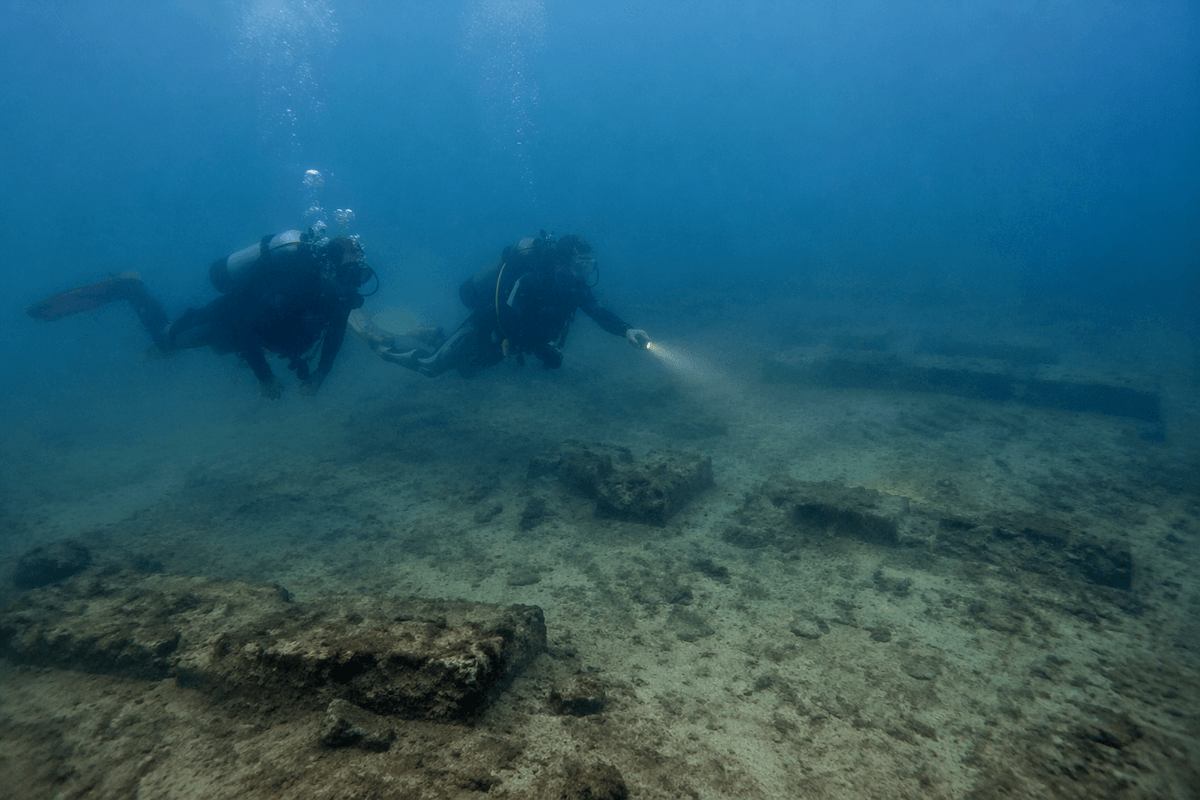
At 8:10 a.m., I was half-dressed in a damp shorty wetsuit, staring at a clipboard waiver while the shop’s compressor rattled in the back. The staff asked for my certification level and recent dives, then pointed at the bay and said visibility had been “better yesterday.” That’s the pivot moment: a dive here isn’t a casual add-on like renting masks, it’s a small logistical commitment that only pays off if conditions cooperate.
If you do dive it, set expectations closer to “careful inspection” than “movie set.” Compared with a colorful wall dive, the interest is in faint structure—straight edges, alignments, the sense of human pattern—and that means your guide matters as much as your buoyancy. A good briefing (photos, a sketch, what not to touch) can turn ambiguity into something legible; a generic “follow me” tour can feel like you paid to look at gravel. This works best for couples comfortable with slow finning and a slower reward curve.
Gearing up, a short boat ride, and surface intervals can chew through the same morning you’d use for Old Town or a beach hop. If winds are up, boats are already churning the bay, or you’re squeezing this between ferries, skip the dive and choose an interpretive option instead—you’ll get a clearer story with less stress. If the sea is calm and you can start early, it’s one of those dives that feels “quietly special” rather than instantly spectacular.
Make it work with Korčula plans
At 7:35 a.m. I was on the quay with two coffees going lukewarm, watching the catamaran boarding line thicken while I tried to wedge a “quick snorkel” into a ferry day. The bay looked flat enough, but the clocks didn’t: check-out time, bag storage, and a lunch reservation all squeezed the same window. It was the first time the site felt less like a place and more like a scheduling decision.
If you’re island-hopping for five days, this works best as a morning micro-mission, not a centerpiece. Slot it on a day you’re already near the bay, start early (before wakes and midday haze), and cap it at 30–45 minutes in the water—then you can still do Korčula Old Town without arriving salty and tired. Compared with committing to a long boat loop, the short-guided snorkel is a better trade for last-minute planners: you’re paying for interpretation and positioning, not distance.
The “viewable” doesn’t mean “obvious.” If your must-do list is tight—Old Town walls, a winery, a beach swim—treat this like a conditional stop: go when the water is calm and the operator can clearly explain what you’ll see; skip when it’s breezy, crowded, or you’d be forcing it between ferries. For couples who like history and hate wasting a half-day, the cleanest combo is brief guided snorkel + a museum/story layer afterward, even if the underwater part stays slightly ambiguous.
My pick for first-time visitors
I had my phone open to two tabs—one snorkel guide on WhatsApp, one wine bar holding a 7:30 p.m. table—while a light breeze started to wrinkle the bay around 9:15 a.m. The guide replied with a simple question: “Do you want a story, or just a swim?” It sounded salesy, but it was the clearest way anyone framed the choice.
For first-timers on a five-day hop, my pick is a short, morning guided snorkel that’s explicitly interpretation-led, then stop. You’re not paying for distance or boat time; you’re paying for someone to make low-contrast evidence legible before the wakes, glare, and fatigue stack up. It suits couples who like history and can accept “subtle but real.” If you need a guaranteed visual punch—like a shipwreck silhouette or reef color—this is the wrong category of fun, and a museum-first plan will feel better value.
Book it only if the operator can tell you, in plain language, what you’ll see from the surface today and how long you’ll be in the water (aim for 30–45 minutes). If they hedge, the wind is already up, or you’re squeezing it between ferries, spend that same morning on Old Town and keep your swim simple elsewhere. When it lines up, treat it as a smart detour—not a headline to chase.







![How to Negotiate Medical Bills in Collections [13 Legit Steps]](static/image/2026/07/14/9e314051-9bc1-4519-a5b7-8e862903d3e4.png)
![Copper Banking Review [Is the Copper Debit Card Legit?]](static/image/2026/07/14/9e0812e3-46e4-4fe8-9ffa-29f782e18bf6.png)