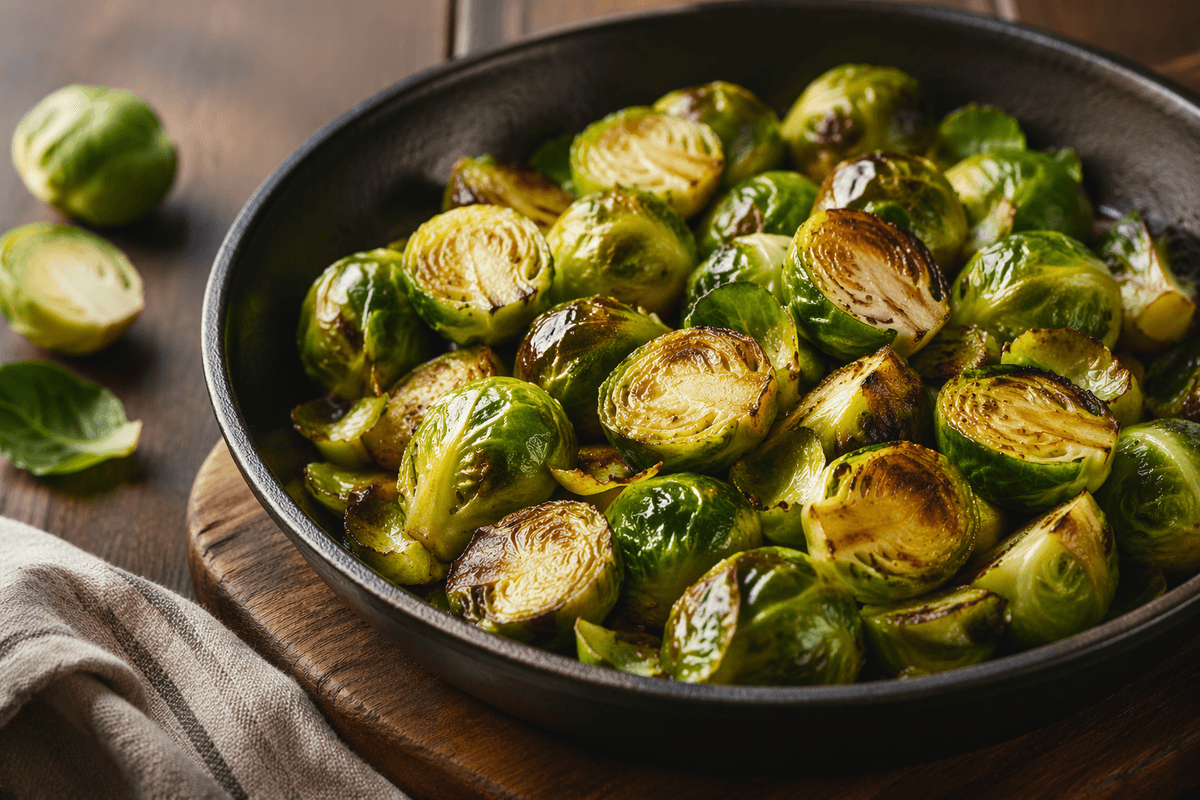
Why Brussels sprouts feel divisive at first bite
The first time Brussels sprouts land on your plate, the reaction can feel oddly split: one person tastes “fresh and nutty,” another gets “sharp and cabbage‑y” and pushes them aside. That snap of bitterness isn’t your imagination, and it’s not always about how “healthy” you’re trying to be. It’s a mix of natural plant compounds and how your mouth reads them when you’re expecting something more neutral, like potatoes or rice.
Brussels sprouts carry sulfur‑containing compounds that can come across as savory when they’re browned, but harsh when they’re steamed into softness. They also have glucosinolates that contribute to that distinctive bite; depending on your taste sensitivity, they may register as pleasantly complex or simply too intense. Add in their tight, leafy texture—more chew and more fiber than many side vegetables—and the first few bites can feel like work, even before you notice they’re more filling than you expected.
That divisiveness matters because it’s often the moment people decide whether a vegetable becomes “repeatable.” If the first serving tastes aggressive, it’s easy to label them as not worth the effort, even though the same sprouts can taste entirely different with a small change in preparation.
Nutrients that quietly add up over weeks
It’s often not the first plate that changes anything—it’s the third or fourth time you toss a handful into the pan because they’re already in the fridge. Somewhere in that repeat, the payoff is quieter than “superfood” language: a steadier dose of fiber that can make meals feel more “done,” and a nudge toward more regular bowel habits that you only notice when it’s missing.
Brussels sprouts also carry vitamin C, vitamin K, and folate—nutrients that don’t announce themselves, but tend to matter when your weeks are built around quick proteins and refined carbs. If your vegetable intake is sporadic, those micronutrients come in bursts; when sprouts show up a couple times a week, the baseline rises without much extra planning.
Then there are glucosinolates and related plant compounds that make sprouts taste distinctive in the first place. They’re part of why people connect frequent cruciferous vegetables with longer-term “risk pattern” benefits, even though day-to-day you may just notice the practical trade-off: more fullness, but also a higher chance of mild gas if the portion jumps too fast.
Sulfur compounds: the same reason for benefits and odor
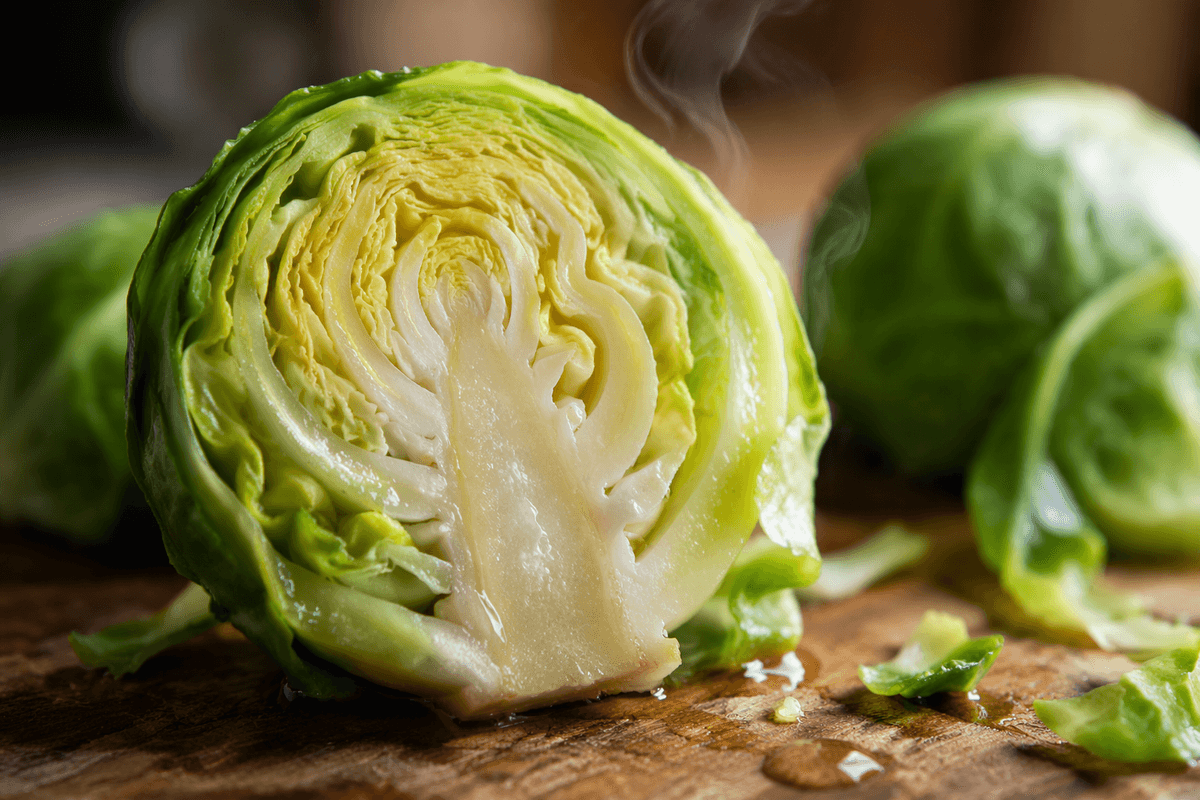
You notice it most when you open the container the next day: that faint “cabbage” smell that can make you wonder if the sprouts are turning, even when they’re perfectly fine. It’s the same family of sulfur compounds that gave the first bite its edge—just showing up in the air instead of on your tongue.
Brussels sprouts store glucosinolates, and when you cut or chew them, plant enzymes start breaking those compounds down into smaller sulfur-containing molecules. Some of those breakdown products are part of why cruciferous vegetables get linked with longer-term health protection patterns, but they’re also why the kitchen can smell a little like boiled eggs if the heat is high and the moisture is trapped.
The “good stuff” isn’t separate from the odor—it’s tied to the same chemistry. How strong it seems can vary with how finely they’re cut, how long they cook, and even how sensitive you are that day.
What your gut may do with frequent servings
It can show up as a small surprise a few hours later: your waistband feels tighter, or there’s more rumbling than you expected from what looked like a simple side. With Brussels sprouts, that reaction often isn’t “bad tolerance” so much as your gut microbes getting more fermentable material than they’re used to, especially if your usual rotation is mostly protein plus bread, rice, or pasta.
Their fiber doesn’t fully break down in the small intestine, so more of it reaches the colon where bacteria turn it into gases and short-chain fatty acids. That process may help explain why repeat servings can make meals feel more satisfying and why bowel habits sometimes get more regular over a couple of weeks. It can also explain the inconsistency: one week you feel pleasantly full, another week you feel puffy, depending on portion size, stress, and what else you ate.
Cooking changes the “gut feel,” too. Softer, smaller pieces tend to move through differently than big, tightly packed halves, which can make the same vegetable feel either easy or oddly heavy.
When a “healthy choice” unexpectedly feels uncomfortable
Sometimes it’s the “good” dinner that leaves you second‑guessing your body. You eat sprouts because you’re trying to be consistent, and then the next morning you feel gassy, overly full, or like your stomach is sitting heavy—especially if you went from “almost no vegetables” to a big bowl of them in one week.
A lot of that discomfort can be a portion jump more than a true mismatch. Brussels sprouts bring a dense mix of fiber, water, and sulfur-containing compounds. Fiber pulls more work into the gut, and the same fermentation that can support steadier bowel habits can also create pressure and extra gas when the pace changes. That’s why the experience can feel inconsistent: a half-serving feels fine, a double serving feels like a balloon.
It can also look like a cooking issue. Very soft, closed-up sprouts can trap more odor and feel mushy, while very large, undercooked pieces may feel harder to “handle.” If the pattern continues, it’s often worth noticing what changed—size, doneness, or simply how much landed on the plate.
Cooking and cutting choices change texture and bitterness
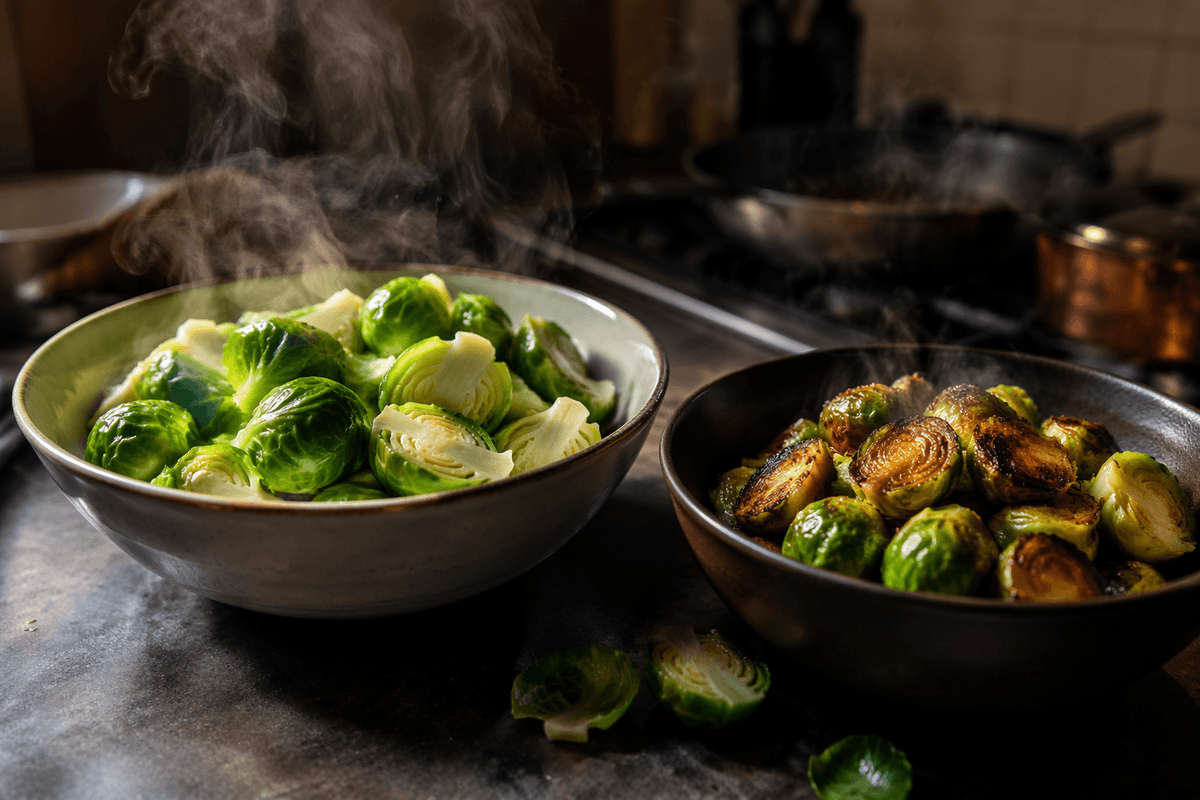
You can usually tell in the first minute at the stove whether sprouts are going to be “easy” or oddly stubborn. The ones that stay pale and wet tend to taste sharper and feel softer in an unappealing way, while the ones that actually brown pick up a sweeter, nuttier edge that makes the cabbage note fade into the background.
That difference starts with moisture and surface area. When sprouts are cut into halves (or thin shreds), more of the interior is exposed, so heat hits faster and browning happens before they over-steam. Left whole, the tight leaves hold water and cook unevenly—tender outside, dense inside—which can read as bitter and heavy even when they’re technically “done.”
There’s also a small timing quirk: cutting and then letting them sit for a while can make the sulfur smell more noticeable, because the plant’s enzymes keep reacting in the background. It doesn’t mean they’ve gone bad, but it can make the kitchen moment feel harsher than the meal needs to be.
Making them a regular food without overthinking it
On a weeknight, it’s often the leftovers that decide whether Brussels sprouts become “a thing” or a one-off: you open the fridge, catch a faint sulfur note, and wonder if you should bother. But repetition is usually less about motivation and more about predictability—knowing how they’ll taste and how your gut will respond.
In practice, sprouts tend to work best as a “default veg” when the serving stays modest and consistent. Their fiber and water can make a meal feel finished, and over a few weeks that steady rhythm is what adds up for fullness and bowel regularity—not a heroic portion once in a while. The same glucosinolate chemistry that gives them bite may be part of longer-term protective patterns, but it also means your body feedback can be noisy if the amount swings.
If you notice that some days they feel easy and other days oddly heavy, it’s rarely mysterious: size, doneness, and how much landed on the plate change the fermentation load. When you read it that way, “worth repeating” becomes less of a verdict on sprouts and more a small adjustment you can actually keep.
![How to Negotiate Medical Bills in Collections [13 Legit Steps]](static/image/2026/07/14/9e314051-9bc1-4519-a5b7-8e862903d3e4.png)