What “healthy breakfast” means in real life
The first sign is often a small one: your coffee tastes fine, but by 10 a.m. your patience is thinner, your thoughts feel jumpy, and you’re suddenly scanning for something sweet. It’s easy to label that as “stress” or “just a busy morning,” especially if breakfast was a muffin, a granola bar, or nothing at all because the day started too fast.
In real life, “healthy breakfast” usually doesn’t mean a perfect ingredient list. It tends to mean a mix that slows down how quickly energy hits and how quickly it disappears. Refined carbs on their own can feel like a quick lift, then a drop—because they digest fast and don’t create much staying power. Adding protein, fiber, or some fat often changes the timeline: hunger comes on later, cravings feel less urgent, and focus is a little easier to hold.
The same breakfast can land differently depending on sleep, yesterday’s dinner, or how rushed you are. So the most useful definition is practical: a breakfast that leaves you feeling steadier, not just “full,” and makes your next food decision less reactive.
Why some breakfasts energize while others drain you
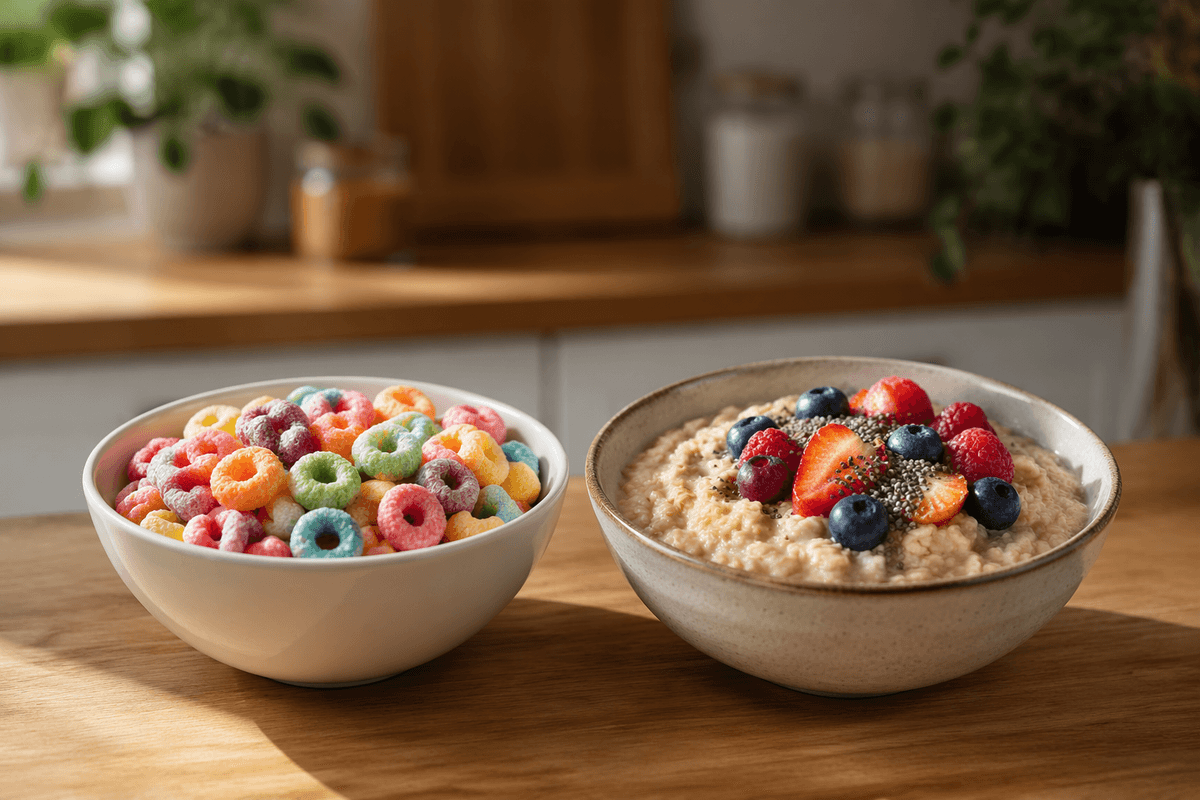
You might notice it on the drive: you ate something, but it’s as if it never “counted.” Your stomach isn’t exactly empty, yet your brain wants more—usually something quick. That’s the mismatch people often describe as an energy crash, even when the morning started with a bagel, cereal, or a pastry that felt satisfying in the moment.
A breakfast that’s mostly refined carbs can move through you fast, pushing blood sugar up and then letting it fall sooner than you expect. As that drop shows up, it may feel like fogginess, irritability, or a sudden pull toward snacks. Protein and fiber slow digestion, and fats tend to extend satisfaction, so the “need food now” signal arrives later and with less urgency.
But it isn’t perfectly predictable. The same oatmeal can feel steady one day and flimsy the next if sleep was short or yesterday’s dinner was light. Over a few weeks, though, patterns get clearer: if you’re repeatedly hunting for food by mid-morning, it’s usually less about willpower and more about a breakfast that burns too quickly.
Protein-forward options that feel surprisingly easy
Some mornings the “problem” isn’t that you skipped breakfast—it’s that you ate, and 45 minutes later you’re already thinking about the next thing. That’s when protein can feel almost unfairly helpful, not because it’s a magic ingredient, but because it tends to slow the pace of digestion and makes hunger signals less jumpy.
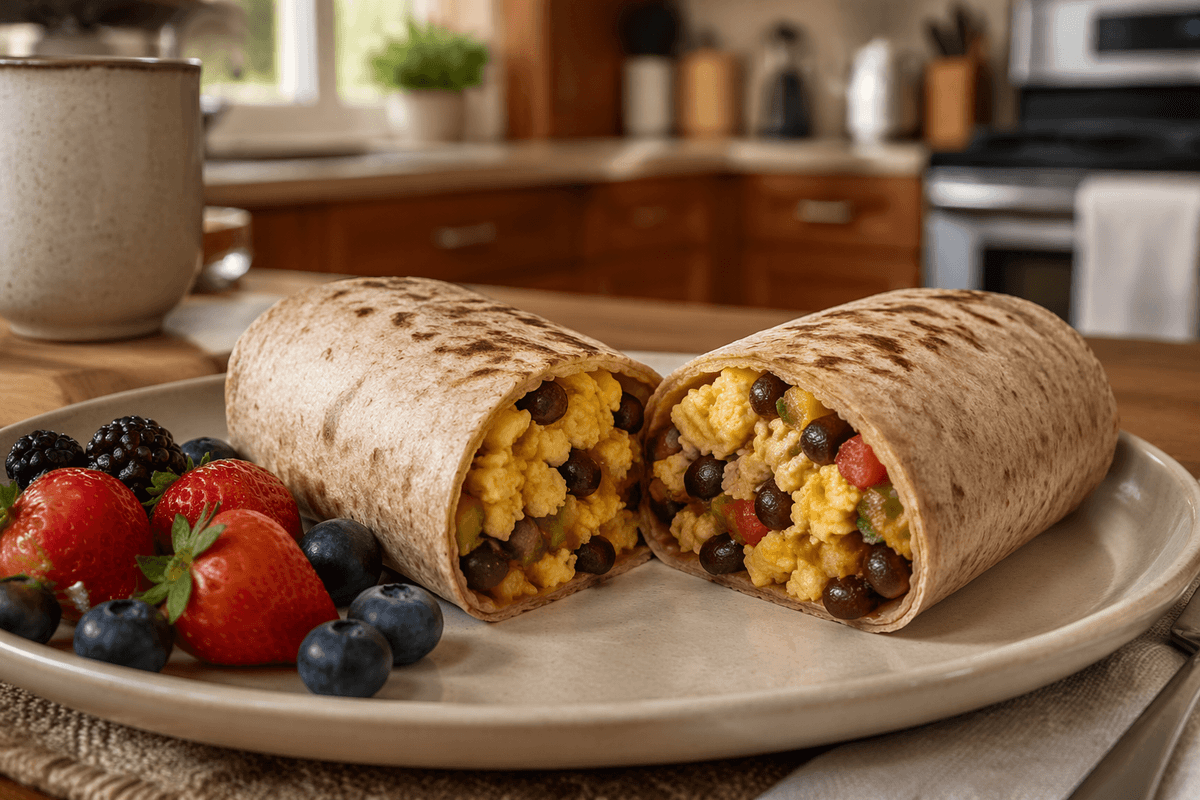
The easy version usually looks a little boring on the counter: Greek yogurt or cottage cheese with fruit; two eggs (or egg bites) with toast; a breakfast burrito built around eggs or beans; even last night’s chicken with a piece of fruit. Protein adds a kind of backbone, so the carbs you do eat don’t hit as fast and disappear as quickly.
A “high-protein” bar might read well on the label but act more like candy if it’s mostly sugars and starches, which is why some people feel steady with yogurt and suddenly snacky after a bar that seemed equivalent.
Fiber and slow carbs that keep hunger quiet
You can feel the difference in the small moments: you finish breakfast, and instead of that sharp “I need something else” feeling, hunger stays in the background while you’re answering emails or doing school drop-offs. People often assume that’s just a bigger portion, but it’s frequently the kind of carbohydrate you ate. A bowl of sugary cereal can vanish fast. The same volume of oats or a slice of denser whole-grain bread tends to sit differently.
Fiber and slower-digesting carbs work a bit like friction. They slow how quickly food leaves the stomach and how quickly glucose shows up in the bloodstream, which can soften the rise-and-fall pattern that drives mid-morning cravings. That steadier pace also gives protein and fat more time to “do their job,” so you’re not relying on carbs to carry the whole morning.
“Multigrain” muffins and some granolas still behave like refined carbs, especially when they’re sweetened and low in actual fiber. Meanwhile, options like oatmeal, chia pudding, berries, beans in a breakfast burrito, or whole-grain toast alongside eggs may feel less exciting—but they often delay the next snack decision by an hour or two, which is usually the real win.
Healthy fats that improve satisfaction and focus
It often shows up as a low-grade restlessness: you ate a “good” breakfast, but you keep standing up for more coffee, more water, something to nibble. That can happen even with decent protein and fiber if the meal is very low in fat—because fat tends to slow stomach emptying and stretch the feeling of satisfaction, so your brain isn’t scanning for the next hit of energy quite as soon.
Healthy fats don’t have to be a big add-on to matter. A spoonful of nut butter with oatmeal, avocado with eggs, chia or flax stirred into yogurt, or a handful of nuts alongside fruit can make the same breakfast feel calmer. In some situations, that steadier digestion also supports focus: fewer sharp swings, fewer “urgent” hunger signals pulling your attention away.
Fat can be easy to overshoot because it’s calorie-dense, and some options are more snackable than satisfying. If you notice your breakfast holds you longer but feels heavy or sluggish, it may be less about fat being “bad” and more about the amount—or what it replaced in the mix.
When a “clean” smoothie backfires unexpectedly
The weird part is how innocent it feels: you blend fruit, spinach, maybe oat milk, and it goes down so easily that it barely registers as “food.” Then an hour later you’re shaky-hungry, suddenly impatient in a meeting, and looking for something crunchy or sweet. People often assume that means smoothies are “bad” or that their body is “reacting” to fruit, when it’s usually a simpler mismatch in the mix.
A smoothie can act like a fast carb meal because the fiber structure is broken up and the drinking part is quick. Even with healthy ingredients, it may hit the bloodstream faster than expected—especially if it’s mostly fruit, juice, or sweetened yogurt—and liquid calories don’t always create the same fullness signal as chewing. Without enough protein or fat to slow things down, you can get the classic pattern: a quick lift, then a drop that feels like cravings or brain fog.
The same smoothie may feel fine on a well-rested day and fall apart after short sleep or a light dinner. If the “clean” smoothie keeps leaving you snacky, it’s not a moral failure—it’s a clue that your morning needs more staying power.
Building a repeatable breakfast without overthinking it
Some mornings you don’t realize breakfast was flimsy until you’re already in the car pool line, wishing you’d eaten “more,” even though you technically did. That’s usually when the goal shifts from finding the perfect option to finding something you can repeat—because consistency matters more than novelty when you’re trying to avoid the late-morning dip.
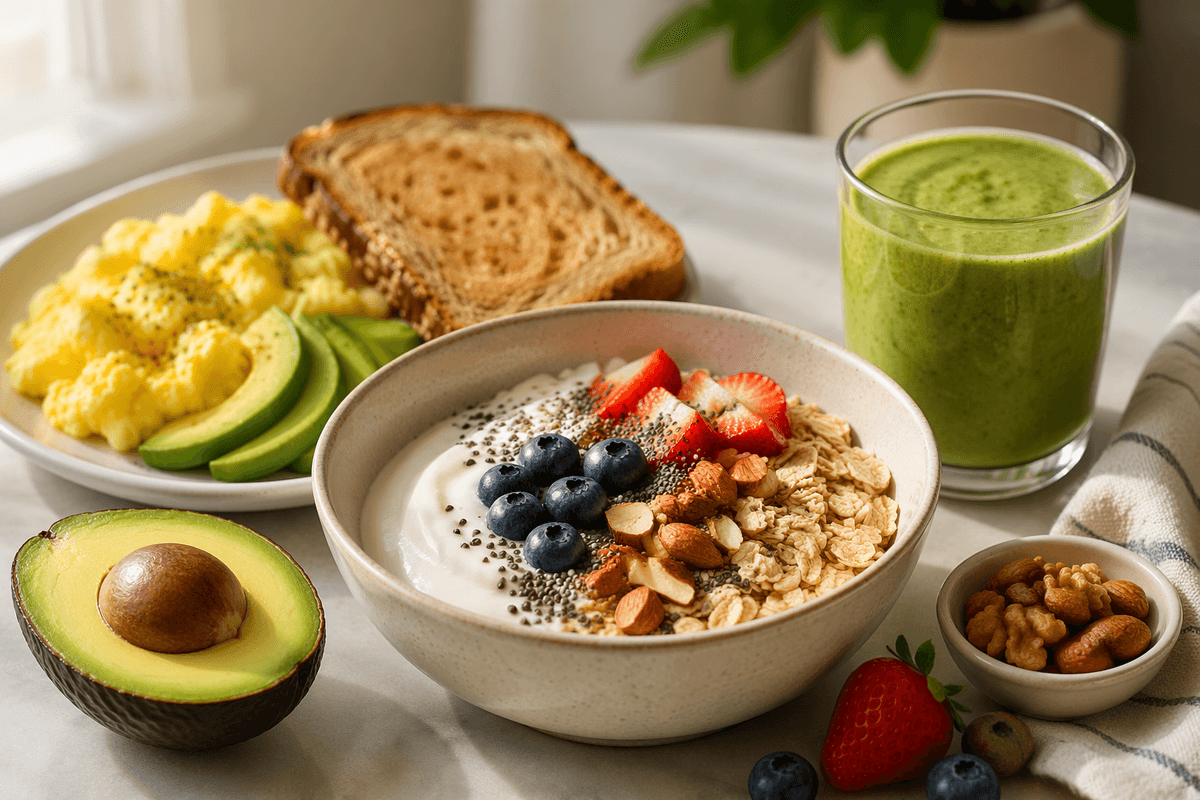
A repeatable breakfast is often just a simple template you can recognize: a protein anchor, a slow carb or fruit, and a little fat or fiber to slow the whole thing down. It’s not always neat—sleep changes appetite, meetings change timing, and some days you’ll want lighter food. But if you notice the same pattern of cravings or fog by 10 or 11 a.m., it’s often less about discipline and more about what was missing in the mix.
Over time, the most useful skill is noticing your “next hunger” clock. If it’s always early and loud, your breakfast likely digested too fast. If it’s later and quieter, you’ve probably built something that fits your morning, even if it isn’t Instagram-worthy.










![How to Research Stocks Before You Buy [How to Pick Stocks]](static/image/2026/07/14/c31ea3ae-07b2-446c-b67a-e56ae4a55f8b.png)