Pace beats mileage in the Carolinas
At 7:10 a.m. I stood at the RV park exit with coffee cooling in the cupholder and GPS chirping “3 hours 12 minutes,” and still hesitated. On paper it was only 165 miles, but the Class C felt happiest at 58–62 mph, and every fuel stop with a dog walk turned into a small production. That’s when it clicked that “short” Carolinas drives can behave like long ones once you add coastal traffic lights, bridge bottlenecks, and the occasional wrong turn that isn’t easy to undo with a 25-foot rig.
For an 8–10 day loop, pace matters more than mileage because the friction is uneven: beach towns compress time (stop-and-go, limited grocery parking), while Blue Ridge days stretch it (curvy grades, slower averages, fewer quick pull-offs). A 120-mile day to the coast can feel heavier than a 180-mile inland hop. If you’re limited on PTO, aim for two “move days” capped around 2.5–4.5 hours behind the wheel, then stack two-night stays where your dog can actually decompress and you’re not repacking the same bins nightly.
The trade-off is obvious: fewer pins on the map, more daylight where it counts. It works best for first-time renters who want hookups and low-stress arrivals before dark; it’s less satisfying if your goal is constant city sampling. If you find yourself planning sunrise departures to “make it all fit,” that’s the moment to cut a stop, not add one.
Mountains-first or coast-first start
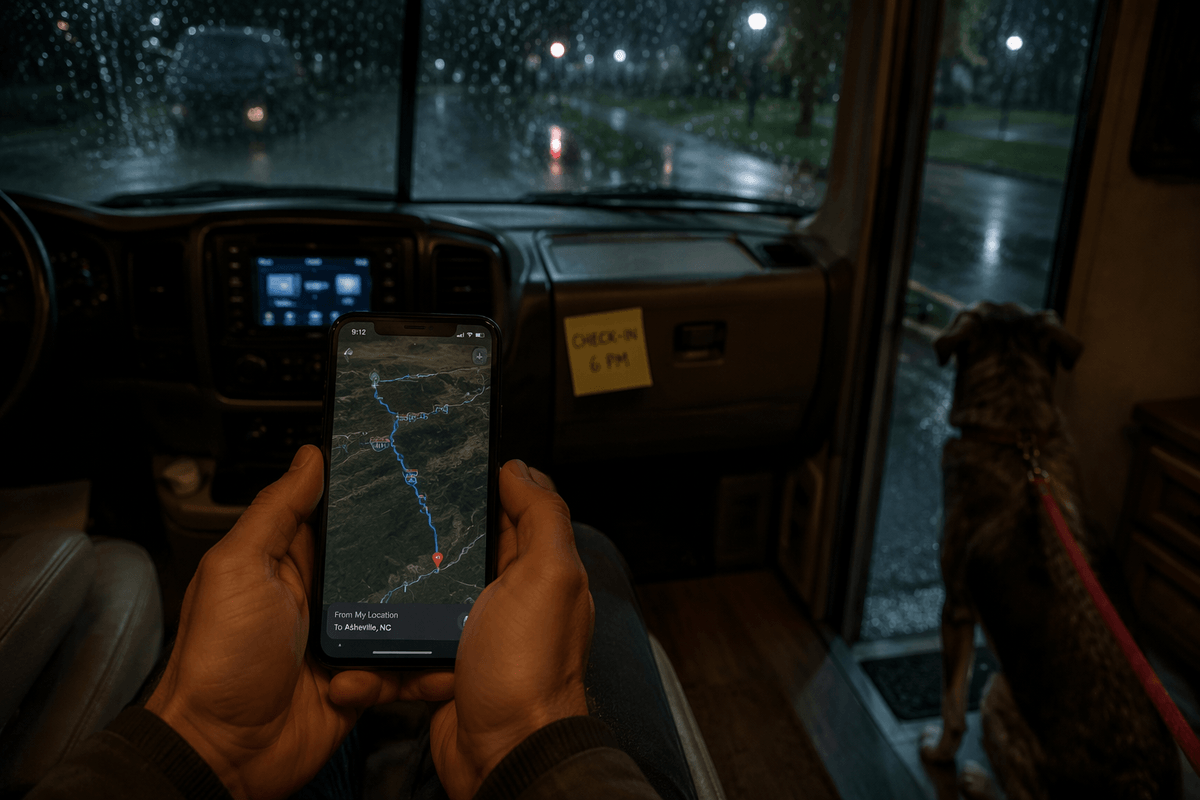
At 9:40 p.m. I was still toggling between two routes on my phone, zoomed in on US-74 and I-40, with a sticky note that just said “CHECK-IN 6 PM.” The map made the coast-to-Blue Ridge jump look like a clean diagonal; the reality was a long arrival window, a dog that needed a real walk, and a rig I didn’t want to back into a tight site in the dark.
Mountains-first works best if you’re starting from the Piedmont (Charlotte/Raleigh) and you want the “harder driving” while you’re fresh: grades and curves early, then you coast (literally) later. The limitation is weather and speed—foggy mornings on the Parkway, summer storms, and slower averages can make a 140-mile mountain day feel longer than a 200-mile highway run. It’s a good fit if your dog hikes well and you’re okay trading beach parking stress for winding roads.
Coast-first is the better play when you’re chasing shoulder-season beach weather or you can only guarantee one must-have reservation. Beach campgrounds with hookups book tighter and earlier, and beach towns punish late arrivals with narrow turns, sand-clogged shoulders, and grocery lots that weren’t designed for a Class C. If you do start on the coast, plan one “buffer” night on an inland corridor (think near I-95 or US-17) before turning toward the mountains, so the loop doesn’t hinge on a single perfect drive day.
Turn the map into sane drive days
At 6:05 p.m. I pulled into a Love’s off I-40 with 38 miles left to camp, watching the ETA tick later every time I zoomed out. The map said “easy highway,” but the last hour was always the part that ate daylight: fuel lanes blocked by cars, one missed exit that’s hard to correct in a Class C, then surface streets that turn into stoplights right when you’re tired. That’s when I stopped planning by miles and started planning by “arrival friction.”
For a coast-to-mountains loop in 8–10 days, I’d sketch three anchor zones and keep the links between them boring on purpose: (1) a coastal base (Wilmington/Carolina Beach or the Outer Banks area), (2) a “bridge night” inland near I-95 or I-40 (think Fayetteville/Goldsboro-ish), (3) a Blue Ridge base (Asheville/Hendersonville or Boone/Blowing Rock). You’ll pass tempting small towns without stopping, but you’ll actually arrive in time to walk the dog and connect hookups without a headlamp.
What works for first-time renters: cap move days at 3–4.5 hours of wheel time, then add a hard 60–90 minutes for gas + groceries + dog breaks, and aim to roll into camp by 4 p.m. Beach campgrounds with full hookups are the must-book piece; mountain sites are often more forgiving if you’ll accept a slightly less “perfect” location. If you’re trying to squeeze a beach sunrise and a Parkway overlook into the same day, that’s usually the sign you need the buffer night, not a faster route.
Book campgrounds that match your rig
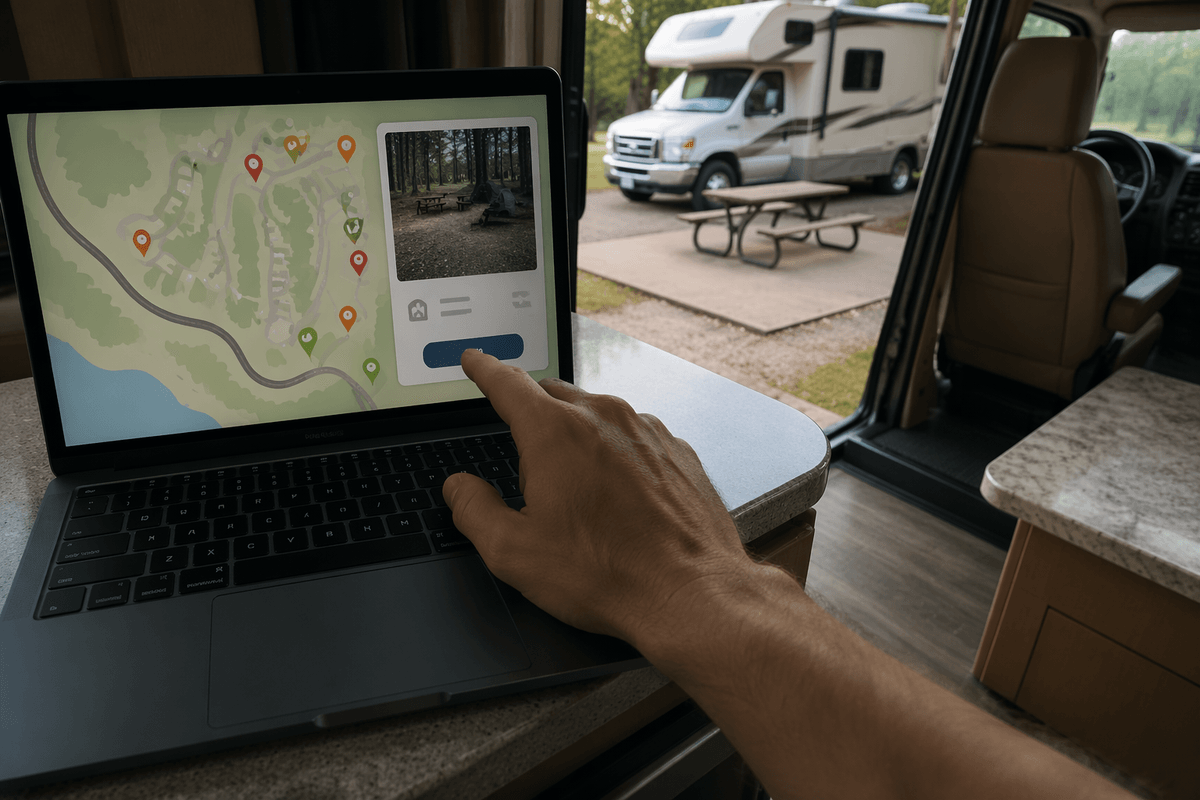
At 3:17 p.m., I hovered over the “Reserve” button while the site map showed three green loops and one tiny warning: “Max RV length 25 ft.” Our Class C was right there on the edge, and the photo of the pad looked like a postage stamp with a picnic table parked dead-center. I could feel the future version of me trying to back in while a line of weekend arrivals watched.
For a first rental, the campground match matters more than the amenities list. A “full hookup” site that’s short, unlevel, or tight on turning radius can cost you an hour of sweat compared to a boring pull-through with room to reset. Look for: site length that clears your bumper with space to spare, notes about “big-rig friendly” roads inside the park, and a check-in window that doesn’t force a dusk arrival. You’ll sometimes pick a less scenic loop to avoid a three-point turn with trees on both sides.
Booking strategy is where reality bites: beach parks tend to lock up earlier and punish spontaneity, while mountain areas often have more acceptable “Plan B” options if you can live without the perfect riverfront pad. If you travel with a dog, prioritize easy after-hours access to a walking loop over being closest to the bathhouse. When you’re torn between two campgrounds, choose the one that lets you arrive earlier and park easier—you’ll use that saved energy on food and a sunset walk, not leveling blocks.
Choose stops that earn the detour
At 2:12 p.m., somewhere between Southport and Wilmington, I watched the fuel gauge drop faster than my patience and skipped a pretty-looking waterfront turn because the street grid got tight. Five minutes later we rolled into a bland shopping-center lot for groceries, which was safer for the rig and worse for morale. That little detour decision ended up shaping the whole day more than the “main attraction” did.
In the Carolinas, detours earn their keep when they solve two problems at once: they give you a real experience and they behave like an RV stop. A quick beach-town stroll sounds cute until it’s parallel parking and stoplights; compare that with something like Fort Fisher (wide roads, easy in/out, big-sky feeling) or Huntington Beach State Park in Murrells Inlet if you’re already running north—both feel like “destination” stops without the downtown squeeze. The limitation is timing: hit them late afternoon on a Saturday and even the easy places start to feel cramped.
Inland, I’d detour for food only when parking is predictable. Lexington-style BBQ or a brewery patio in Asheville works if there’s a lot you can commit to; it doesn’t work when you’re gambling on street parking with a dog and a 25-foot box. My rule: if the stop risks a stressful U-turn, it’s not a detour—it’s a tax. If you’re unsure, pick the stop that buys you an early arrival and spend the “saved” hour on a longer walk.
What I’d do on a first trip
At 8:28 a.m. I’d be sitting at the rental lot with the walk-through checklist still open, realizing we’d lost 30 minutes to “where’s the sewer hose?” and a nervous mirror adjustment. That’s the moment I’d stop pretending this is a fast road trip and commit to fewer moves. With a dog onboard and limited PTO, the win isn’t squeezing in one more stop—it’s arriving while you still have daylight and patience.
For a first loop, I’d go coast-first if I could lock a beach campground with hookups, then let the mountains be the flexible half. Night 1: an easy “shakeout” park near where you pick up (Piedmont corridor) so you practice backing and setup without a big drive. Nights 2–4: base on the Wilmington/Carolina Beach side and treat anything downtown as a car-and-dog-walk outing, not an RV errand; beach traffic feels like a treadmill compared to inland highways. Night 5: an inland bridge night near I-40 (not scenic, but it protects your check-in window). Nights 6–8: Asheville/Hendersonville area, where you can trade one iconic drive for a shorter hike day if weather turns or you’re cooked from grades.
I’d pre-book two “must land” campgrounds (coast + first mountain night) and keep one night intentionally movable. If a day starts to require a dusk arrival, I’d cut the detour, get parked, and spend the saved energy on local food within a simple lot—your future self will thank you.
![How to Research Stocks Before You Buy [How to Pick Stocks]](static/image/2026/07/14/c31ea3ae-07b2-446c-b67a-e56ae4a55f8b.png)