The real choice is pace, not sights
I paused at the Riga train schedule on my phone at 08:12, thumb hovering over “buy,” because the map made Turaida look like a simple hop from Sigulda. Then I remembered the part the map doesn’t show: the slow, steady walking between stops, plus the little bottlenecks at ticket windows and trail junctions. That’s when it clicked that the real decision isn’t “which sights,” it’s how hard you want to push the day.
If you move fast, Turaida Castle can feel like a clean, efficient loop—castle, viewpoint, quick photo stops, back to transport—especially in longer daylight months. The trade-off is you’ll notice every small delay: a late connection, a bus that’s standing-room only, a line that snakes just far enough to eat your buffer. This pace works for solo travelers who like tight timing and don’t mind brisk walking; it’s less fun if you want to linger in the museum rooms or climb every tower staircase without checking your watch.
If you slow down, the same places feel richer but longer: you’ll spend more time on the paths, stop for snacks, and probably accept that you’re choosing comfort over “adding one more stop.” That approach is safer in shoulder seasons when hours can be shorter and weather makes trails muddy. Decide your pace first, and the “right” itinerary basically reveals itself.
Pick your time window first
I hesitated again at 09:40 outside Riga Central, coffee in hand, because the departure board was doing that subtle thing where “in 6 min” becomes “in 3 min” faster than your legs can. It’s a small moment, but it’s where your whole day-trip either tightens up or relaxes. If you leave late morning, you’re not “wrong,” you’re just volunteering to do more of the castle on someone else’s clock.
The easiest decision is to pick a hard arrival target in Sigulda: either before the late-morning rush (good for photos and quieter paths) or after it (better if you hate sprinting for connections). Earlier works best if you want the Turaida tower climb to feel like a calm warm-up, not a queue-and-stairs combo. Later can be fine for a slower walker, but you’ll pay for it in buffers: shorter museum hours in some seasons, a tighter return window, and less daylight if clouds roll in.
On paper, Turaida looks like “an hour,” but that’s the fast version: walk in, climb, leave. If you actually want time for the courtyard angles, the indoor rooms, and the short paths around the complex without speed-walking, budget 2–3 hours on-site and treat that as non-negotiable. Build your day around that block, then fit transport and any Sigulda add-ons into whatever daylight you have left.
Decide how you’ll reach Turaida
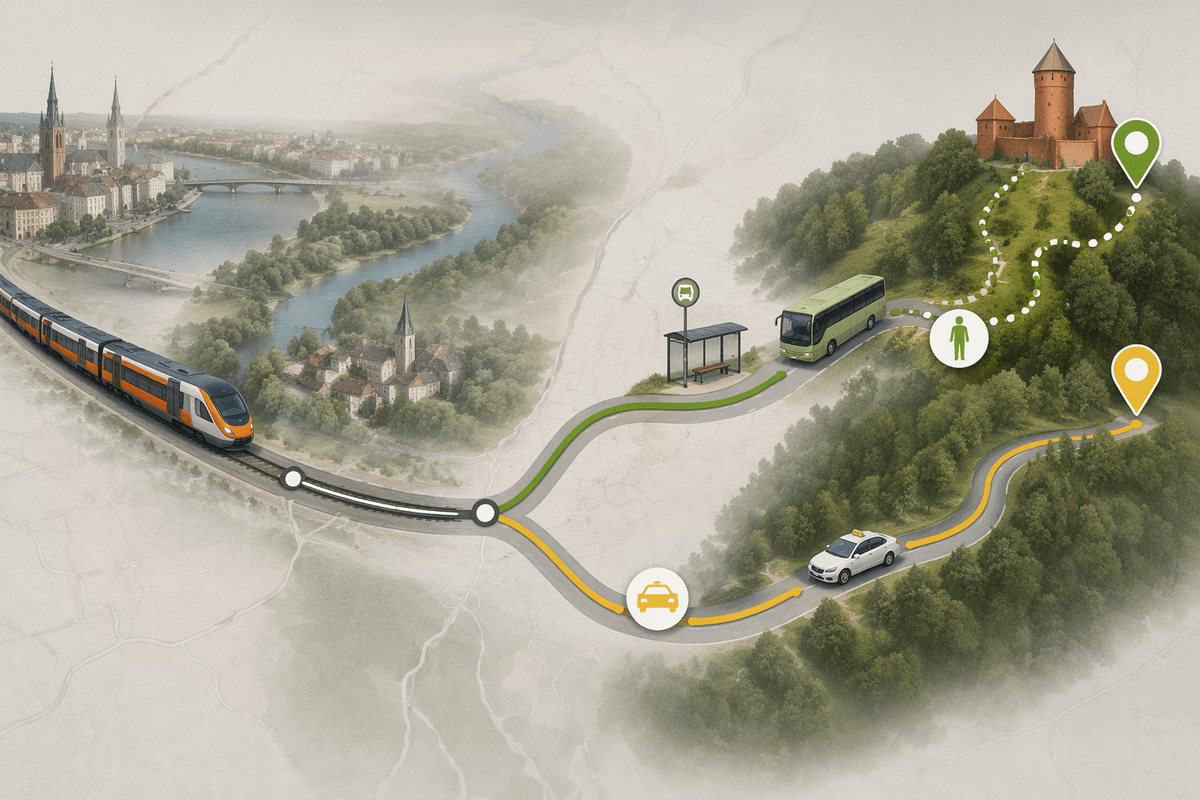
I nearly overthought it at the ticket machine in Riga Central, staring at a screen that wanted a seat selection I didn’t feel qualified to make. The clock said 08:27, the platform number had just popped up, and suddenly “DIY day trip” felt less romantic and more like a small logistics exam. That’s the moment to decide: do you want two simple bookings (transport + entry) or one bundled solution that costs more but reduces decisions?
DIY usually means train to Sigulda, then a short hop onward—bus if you’re timing-driven, taxi if you’re energy-driven. The train is predictable enough, but the last stretch can feel like a connector flight where a 10-minute slip turns into a 40-minute wait. This works best for a solo traveler who’s comfortable watching departure times and walking a bit; it’s less ideal if you hate standing at a stop wondering if you missed the right bus.
A tour smooths out the “last mile” and protects you from seasonal quirks like reduced schedules or muddy paths slowing you down, but you pay in pacing: less time to linger inside Turaida and more time following a flag. If you’re pairing it with Sigulda viewpoints, DIY wins because you can adapt—skip an add-on when queues build, or trade a second stop for an earlier return when your legs start bargaining.
Choose tickets and your walking loop
I got to the Turaida entrance with a perfectly timed plan and immediately lost two minutes to a card reader that wanted a second tap. Behind me, a family group was already doing the “are we in the right line?” shuffle, and the quiet courtyard I’d pictured turned into a small, slow-moving funnel. It wasn’t dramatic, just enough friction to remind me that tickets are part of your pacing, not a separate chore.
If you can buy entry online (or at least decide your ticket type before you arrive), you skip the most annoying bottleneck: the decision-making at the window when everyone else is also deciding. On-site purchases are fine in low season, but in summer midday you’re trading flexibility for a queue that can nibble at your return buffers. Also, don’t assume every building is open year-round or late—museum rooms and smaller exhibits can run on tighter hours than the grounds, so a late arrival often means you’ll still climb the tower but miss the “why this place matters” context.
For your walking loop, pick between “contained” and “stretch.” Contained is the low-stress option: enter, do the tower early (before legs get heavy), then drift through the indoor rooms and the church, and save the wider paths for last if weather cooperates. Stretch is the scenic trade-off: treat Turaida as one end of a one-way walk back toward Sigulda viewpoints; it photographs better, but it’s the version that quietly turns into 12,000 steps. If you’re unsure, choose contained first—you can always extend when the day feels easy.
Add nearby stops only if they fit
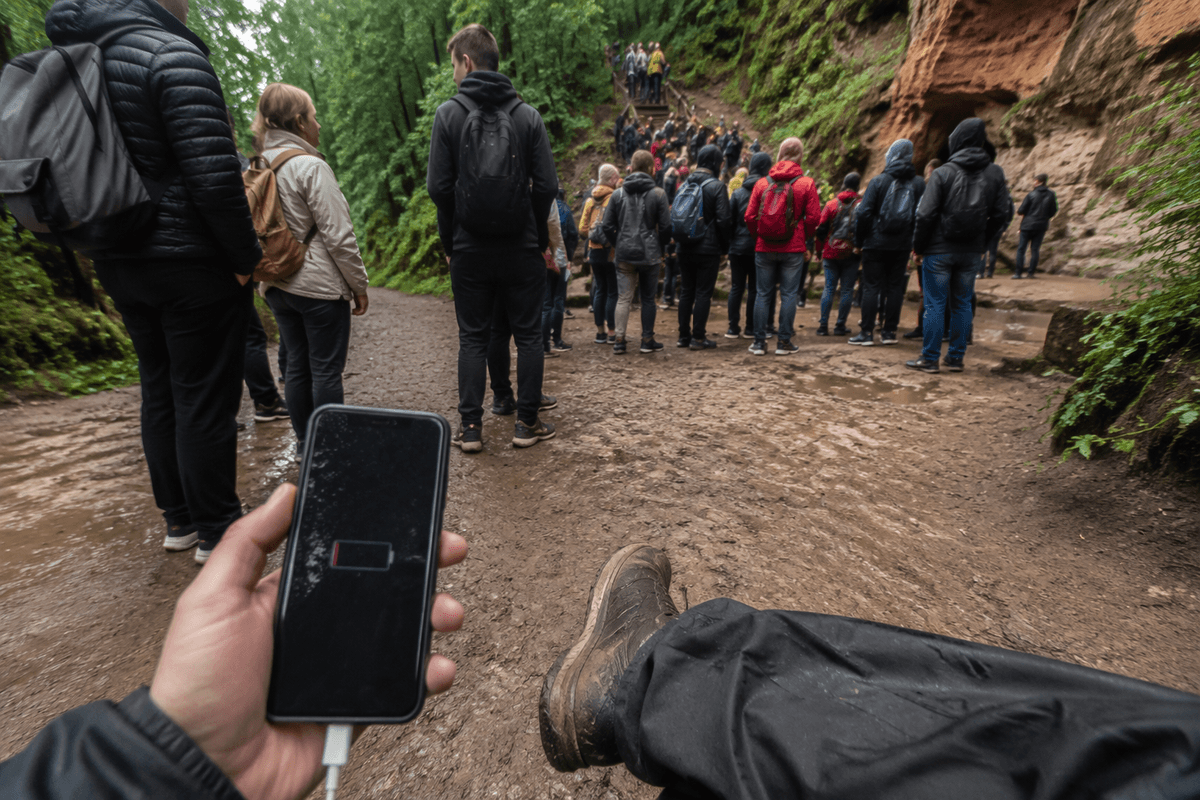
I stood at the trail junction by Gutmanis Cave with my phone at 14% and a damp jacket that suddenly felt heavier than it should. The sign made it look like “just a short walk” to the next viewpoint, but the path was slow—mud in the ruts, people bunching up on the narrow bits, and that constant stop-start of passing tour groups. It was the first time all day I could feel the return train clock in my calves.
This is where add-ons either help or quietly wreck your buffers. Gutmanis Cave is the easiest “fits if you’re already nearby” stop because it’s on a natural route between Turaida and Sigulda, but it’s also a crowd magnet in summer afternoons—good for photos, bad for momentum. The Sigulda castle ruins / New Castle area works better for late-day wandering: flatter walking, less trail friction, and you can scale it to your energy. Viewpoints (and anything that involves extra stairs) are the trade-off stop: they look great, but they’re the ones that turn a 2–3 hour Turaida block into a full-day haul.
If you’re DIY, pick exactly one nearby stop before lunch and treat everything else as a “only if I’m early” bonus—especially outside peak daylight when smaller sites can close sooner than you expect. If your legs still feel springy after Turaida, go for the scenic detour; if they don’t, choose the easy castle-area loop and spend your last hour protecting your return connection instead of bargaining with it.
What I’d do with half a day
At 12:06 I watched a Riga-bound departure time slide closer while I was still on the wrong side of the Gauja, debating whether the next photo was worth the extra bend in the trail. The air had that just-after-lunch heaviness, and the stairs up to the tower suddenly sounded like a negotiation. Half a day is when Turaida stops being “easy on the map” and starts charging you in minutes.
If I truly had a half day, I’d go DIY only if I could commit to an early train and a simple last-mile plan (bus if it lines up, taxi if it doesn’t). I’d arrive Sigulda, go straight to Turaida, and do the tower first while my legs are honest. Then I’d give myself a contained loop inside the complex—courtyard angles, indoor rooms that are actually open, quick church stop—aiming for 2 hours on-site, not “an hour,” because queues and card readers love stealing the exact time you didn’t budget.
For the pairing, I’d choose exactly one: either Gutmanis Cave only if the path is dry and crowd flow is tolerable, or the flatter Sigulda castle-area wander if I’m already feeling the return clock. A tour would be my pick if it’s shoulder season, I’m arriving later, or I don’t want to do connector math under pressure. My cue: if you’re checking schedules more than the scenery, buy simplicity.