Why outdoor allergies feel worse than expected
It often starts as “just a tickle” on a walk or while watching a game, then turns into watery eyes in the car and a stuffy nose once you’re finally indoors. That’s part of what makes outdoor allergies feel unfair: the discomfort doesn’t always match how much time you were outside, and it may show up later when you think you’re done with exposure.
Pollen and outdoor molds aren’t a steady fog. They rise and fall with weather and movement, and they also cling. Fine grains can catch in eyelashes, brows, and the damp surfaces inside the nose, so irritation keeps going even after you leave the park or finish the commute. Hair, hats, and shirt collars can hold onto what you brushed past, especially on dry, breezy days.
That “worse than expected” feeling can also come from buildup. A couple of mildly irritating days may not feel dramatic in the moment, but they can leave your eyes and nasal lining a little more reactive. Then one windy afternoon, a neighbor mowing, or a shortcut along tall grass can push things over the edge in a way that feels sudden—when it’s really a stack of small exposures.
Pollen exposure is uneven, not constant
You can feel it in the small switches: one block is fine, the next has you blinking hard and rubbing the corner of an eye. The air hasn’t changed everywhere at once. A gust funnels between buildings, a line of trees breaks the wind, or a sunny patch dries things out, and suddenly more particles are in motion right where you’re breathing.
That’s why “I was only outside for twenty minutes” doesn’t always line up with how you feel later. Exposure tends to come in bursts—walking past a hedge, sitting downwind of a field, pushing a stroller along tall grass, or lingering near a mower. In those moments, pollen and outdoor molds can hit the eyes and nose like a quick dose, then keep irritating because they stick to damp surfaces and keep getting stirred each time you wipe, sniff, or rub.
Some days symptoms start during the outing; other days they show up when you get home and the adrenaline of moving around drops. If you notice the same pattern after certain routes or chores, it’s often less about “all day pollen” and more about a few repeat hotspots.
Heat, wind, and humidity change your symptoms
Sometimes it’s the day you step outside and the air feels warm and a little sharp, and your eyes start watering faster than usual. Heat can dry the surfaces of the eyes and nose, and that dryness can make them feel more “grabby” and reactive when particles land. Add sun and a light breeze, and more pollen gets lifted and kept moving at face level, even if the sky looks clear.
Wind is the obvious culprit, but it’s inconsistent—one corner of a parking lot can be calm while the next walkway acts like a tunnel. Those gusts don’t just bring in new pollen; they also re-stir what’s sitting on pavement, mulch, and grass clippings, which is why mowing or leaf blowing nearby can feel like an instant symptom switch.
Humidity complicates it. Damp air can weigh particles down, but it also makes hair and clothing hold onto what you brushed past, so symptoms may show up later, once you’re indoors and everything starts to shed.
Where you stand matters more than you think
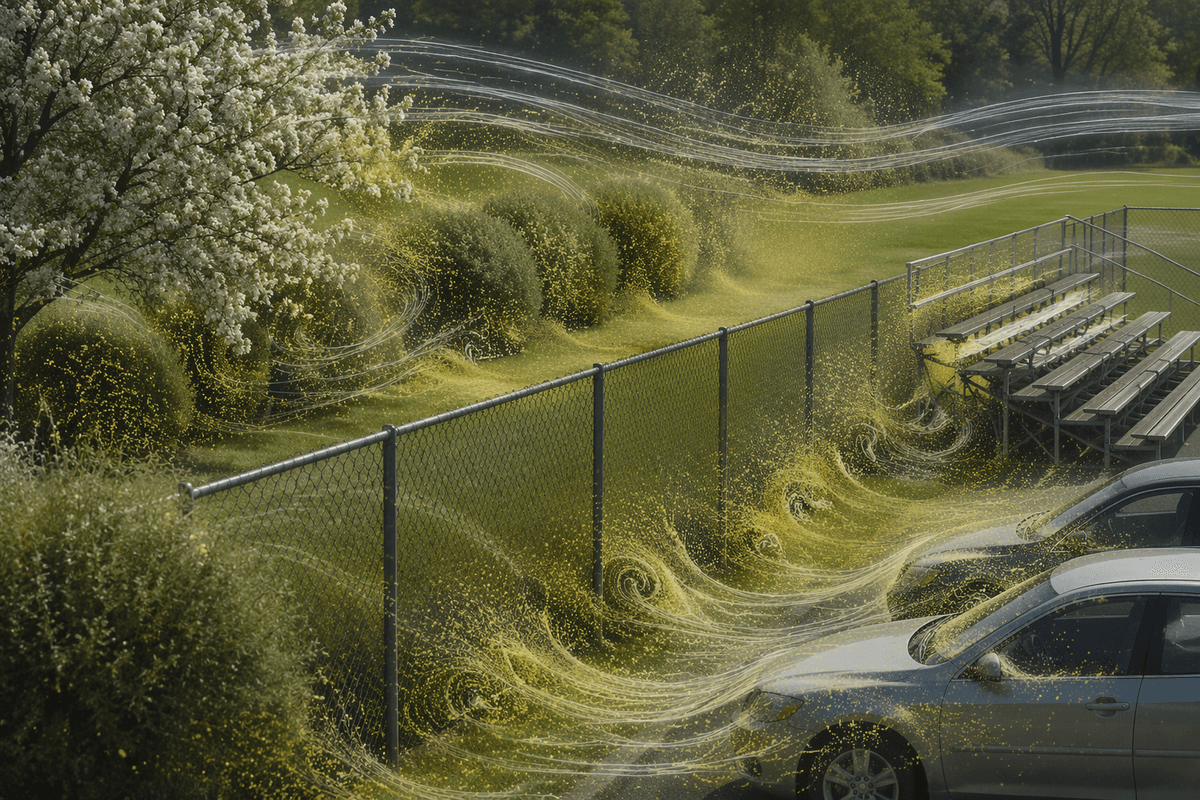
You might stop at the edge of a soccer field and feel fine, then take ten steps toward the sideline and suddenly your nose starts running. It can seem random, but a lot of exposure is “placed,” not just “in the air.” Pollen and bits of outdoor mold settle where wind slows down—behind hedges, along fence lines, near parked cars, and in the lee of bleachers or shrubs.
Height and direction matter, too. When you’re downwind of tall grass or a flowering tree line, the air at face level can be noticeably busier, especially if the ground is dry and people are walking through it. On the flip side, a shaded, damp corner may feel easier in the moment, yet it can hold onto particles that get kicked up when you move again.
The “bad spot” isn’t consistent day to day. A small change in breeze or where you pause can turn a normal outing into an itchy-eye afternoon.
Small barriers that reduce pollen contact effectively
You notice it when you reach the car: the itch is mostly at the inner corners of your eyes, and your nose feels like it’s reacting to something that’s already “on you,” not just around you. That’s the part people miss. A short exposure can still land where it counts—lashes, lids, nostrils, the edge of your hairline—and those contact points keep getting re-stimulated every time you blink hard or wipe your face.
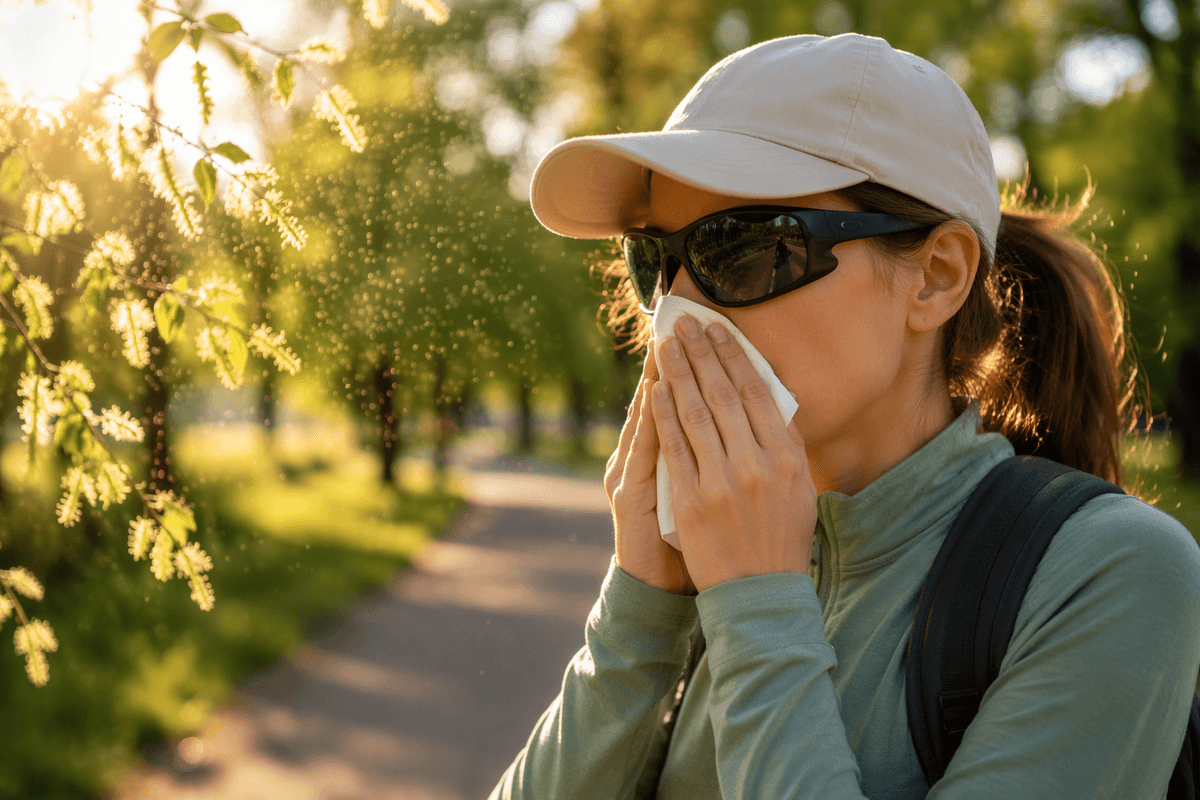
Small barriers work best when they interrupt that first landing. Wraparound sunglasses (even clear ones) can cut the amount that hits the eyes in gusty air. A brimmed cap changes the angle of what blows down toward your face, and it also keeps pollen from settling into hair that later sheds indoors. A light buff or well-fitted mask can reduce what reaches the nose on mowing days or windy walks, though it can feel annoying in heat and some people find they wear it inconsistently.
Even sleeves and a higher collar matter more than you’d think, because exposed skin and fabric near the neck collect particles that get rubbed upward when you adjust straps, carry kids, or towel sweat.
The ‘fresh air’ trap after outdoor exercise
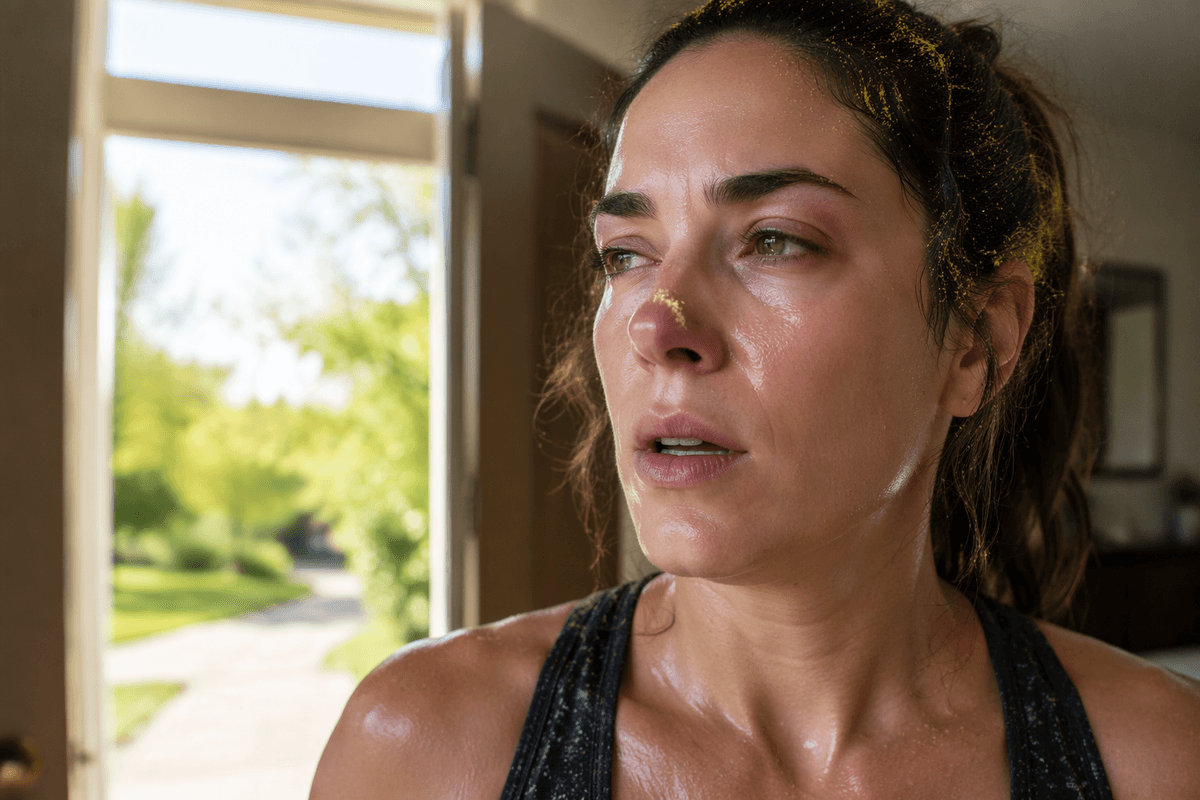
It’s often right after you stop moving that it hits: you step into the house, take a deep “finally, fresh air” breath, and your nose suddenly runs or your eyes start to burn. During a run, a brisk walk, or yard work, the breathing is faster and deeper, and the face is damp. That combination can pull more particles in and give them more places to stick—lashes, brows, the rim of the nostrils, even the sweat line under a cap.
The trap is assuming the exposure ended when the workout ended. But pollen and outdoor molds can ride inside on hair and clothing, then get re-released as you peel off a shirt, shake out a towel, or flop onto the couch. If you tend to rub your eyes after exercise—because sweat stings—that rubbing can push whatever landed on the lids into the tear film and keep the irritation going.
On warm, breezy days, it may feel like the “indoor rebound” is worse than what you felt outside. It’s not always more pollen in the room; it’s often a delayed reaction to what you already collected, plus a tired, dried-out eye and nasal surface that’s less forgiving once you cool down.
Resetting after time outside to prevent lingering flare
You can usually tell it’s “stuck” when the sneezing starts after you’ve already washed your hands, or when your eyes keep itching even though you’re sitting still. A lot of that lingering flare is just leftovers: particles caught in lashes and brows, tucked along the nostril opening, and threaded into hair and shirt fabric. The first few minutes back inside are when those leftovers get moved around the most—rubbing sweaty eyes, pulling a T‑shirt over your head, dropping a jacket on a chair.
A quick reset works because it interrupts that re-release cycle. Rinsing the face and eyelids with plain water, then changing the top layer you wore outside, can take away a surprising amount of what would otherwise keep irritating you. If you can’t change right away, even separating “outside” items (hat, hoodie, work bag) from the couch or bed reduces how much gets reintroduced later.
It’s not always consistent—some days you’ll feel fine without doing anything—but when symptoms keep showing up indoors at the same time of day, it often points to what came in with you, not a mystery new exposure.


![Copper Banking Review [Is the Copper Debit Card Legit?]](static/image/2026/07/14/9e0812e3-46e4-4fe8-9ffa-29f782e18bf6.png)
![How to Research Stocks Before You Buy [How to Pick Stocks]](static/image/2026/07/14/c31ea3ae-07b2-446c-b67a-e56ae4a55f8b.png)
![How to Negotiate Medical Bills in Collections [13 Legit Steps]](static/image/2026/07/14/9e314051-9bc1-4519-a5b7-8e862903d3e4.png)